

Every January, I feel it.
The collective inhale.
The pressure.
The urgency to become someone new overnight.
Social feeds flood with declarations of reinvention. Conversations revolve around resolutions, goals, words of the year, and bold promises to finally get it right. And while I love hope (truly, I do), I’ve come to believe something deeply important through years of healing, motherhood, entrepreneurship, and nervous system work:
The New Year is not a reset button.
And when we treat it like one, we often do more harm than good.
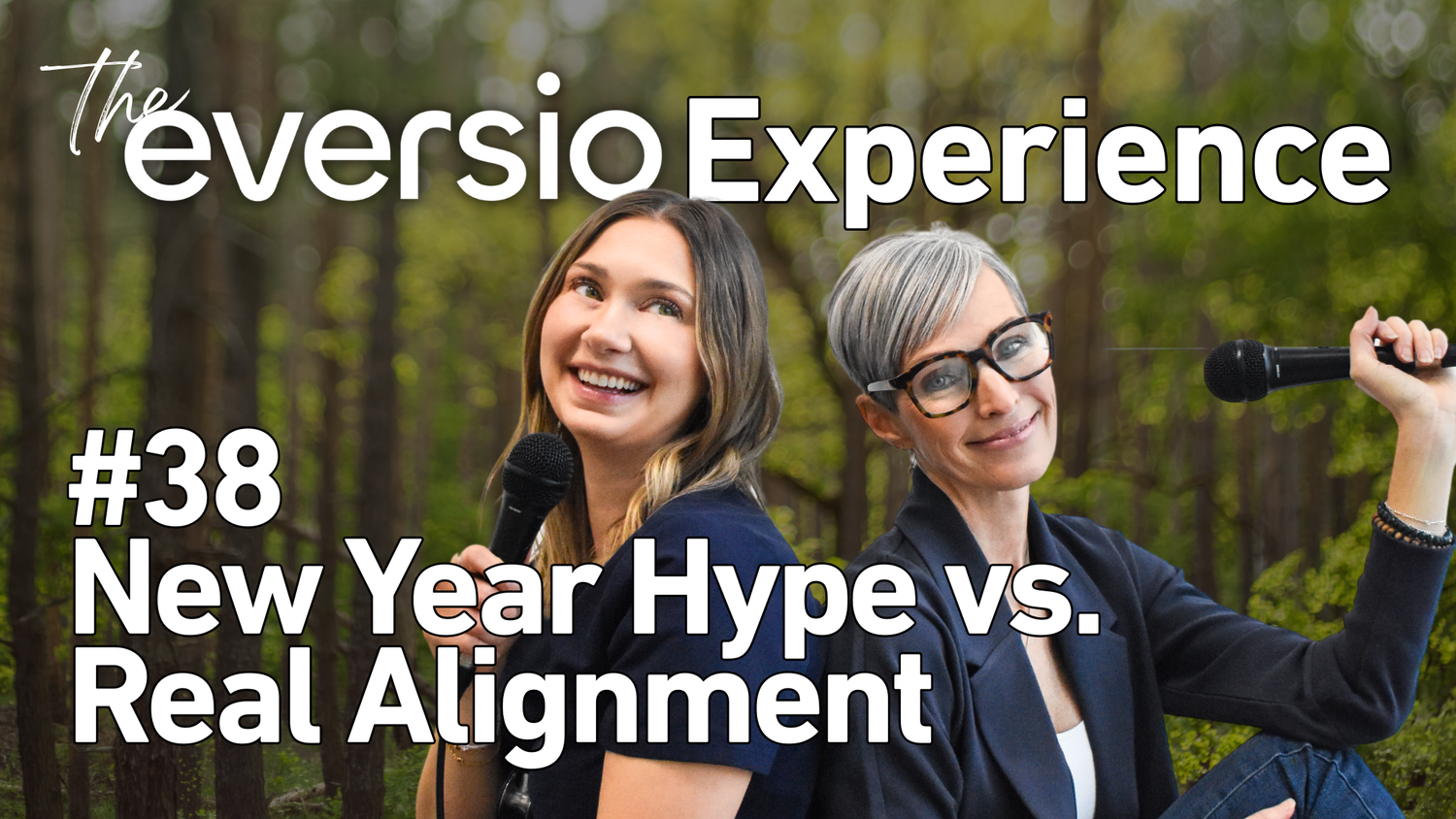
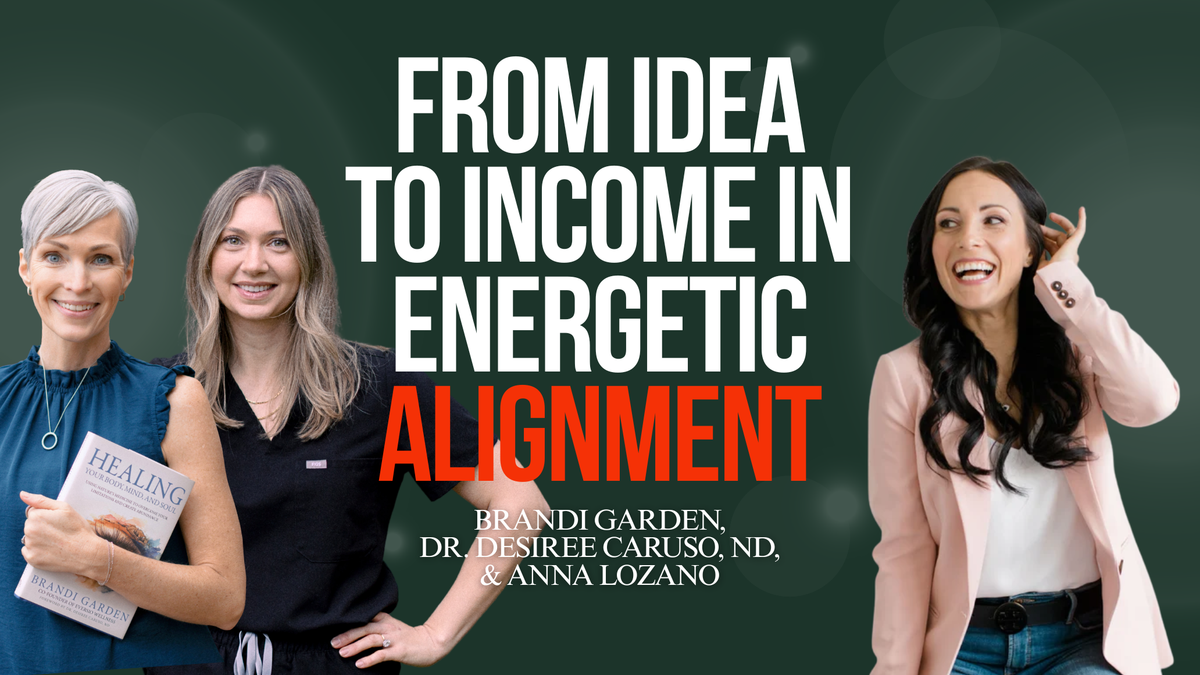
In this episode of The Eversio Experience Podcast, Dr. Desiree Caruso and I sat down to unpack what’s really happening beneath the New Year hype, and why true alignment doesn’t come from forcing change, but from listening more deeply to your body, your capacity, and your lived wisdom.
This blog is an invitation to slow down, reflect, and choose a different path forward-- one rooted in regulation, resilience, and real support.
Why the New Year Feels So Heavy (And Why That’s Not Your Fault)
January is often framed as a fresh start. A clean slate. A chance to “Control, Alt, Delete” your life.
But here’s the truth no one talks about:
Your nervous system does not recognize January 1st as a reset.
You don’t wake up magically rested, regulated, and renewed simply because the calendar flipped. Your body is still carrying:
- Months of responsibility
- Emotional processing from the holidays
- Disrupted routines
- Less daylight
-
Heightened financial and relational stress
And yet, we ask ourselves to perform at peak capacity immediately.
That disconnect alone explains why so many New Year’s resolutions fail; not because we lack discipline, but because we’re asking too much of a system that’s already overloaded.
The Myth of the “Clean Slate”
I want to say this clearly:
You do not start at zero in January.
You arrive with experience.
With data.
With lived wisdom.
Every season you’ve moved through, burnout, healing, growth, grief, joy, has added information to your system. None of that disappears because it’s a new year.
And yet culturally, we treat January as if everything before it should be erased.
This is where so many people begin to feel behind, broken, or late. When in reality, they’re simply arriving as they are.
You are not behind.
You are not broken.
You are not late.
You are arriving informed.

Why New Year’s Resolutions Rarely Work
Let’s talk about the data, because it tells a powerful story.
Studies consistently show:
- 20–25% of resolutions are abandoned within the first week
- A significant drop-off occurs by mid-January
- By February, the majority of resolutions are completely let go
-
Only ~8% of people actually achieve their resolutions
There’s even a name for the third week of January: “Quitter’s Week”; a term I deeply dislike, because it places blame where it doesn’t belong.
When something fails at a population level, it’s not a character flaw.
It’s a flawed approach.
The Real Reasons Resolutions Fail
Most resolutions:
- Are vague (“I want to be healthier”)
- Are extreme (“I’m changing everything at once”)
- Are rooted in guilt or shame (“I should be further along”)
- Ignore nervous system capacity and seasonality
- Rely on motivation instead of support
-
Lack accountability or adaptive structure
And here’s the most important part:
We do not change through shame.
Real, lasting change happens when the body feels safe, not managed, forced, or controlled.
Control Is an Illusion (And the Nervous System Knows It)
When life feels unpredictable, resolutions give us something to grip.
They promise control.
But control doesn’t create safety, understanding does.
From a nervous system perspective, forced control often backfires. The body doesn’t relax when it’s being micromanaged. It relaxes when it feels seen, supported, and regulated.
Transformation doesn’t happen through sharp edges.
It happens through micro-moments.
Through repetition.
Through compassion.

Motivation Is Not the Problem.. Capacity Is
We’re taught that change is about willpower.
But willpower is finite.
Habits don’t stick because we “want it badly enough.”
They stick when:
- The environment supports them
- The system feels repeatable
-
The nervous system has capacity
January is often the month when capacity is lowest, physically, emotionally, hormonally, energetically.
So why do we ask ourselves to do the most?
This mismatch alone explains so much resistance.
Alignment Whispers While Hype Shouts
One thing Dr. Desiree and I both feel deeply this year is how loud collective energy can be especially for sensitive, intuitive people.
Wellness culture, business culture, social media.. all of it tells us to:
- Optimize.
- Fix.
- Upgrade.
- Push forward.
But alignment doesn’t shout.
Alignment whispers.
And you can only hear it when you slow down enough to listen.
This is why meditation, journaling, and stillness matter so much, not as productivity tools, but as ways to reconnect with your internal truth.
 If Resolutions Don’t Work, What Does?
Instead of asking:
“Why can’t I stick to this?”
Try asking:
“What kind of support would make this sustainable?”
Sustainable Change Looks Like:
- Simplicity over intensity
- Systems over outcomes
- Identity over achievement
-
Support over self-pressure
If something requires constant mental effort, it is unlikely to stick.
The nervous system loves ease, repetition, and familiarity.
Identity-Based Change: Who Are You Becoming?
One of my favourite reframes comes from identity-based habit research:
Instead of asking “What do I want to achieve?”
Ask “Who do I want to become?”
Then let your daily actions become votes for that identity.
One push-up still counts.
One mindful breath still counts.
One night of better sleep still counts.
Nothing is too small.

Community Changes Everything
Humans are wired for co-regulation.
We don’t change best in isolation, we change in connection.
This January, our community started a simple challenge together using Oura Ring data:
- Sleep
- Activity
-
Readiness
No perfection.
No punishment.
Just gentle accountability and shared joy.
Even one “triple crown” day counts.
And at the end? We celebrate together.
Because change should feel connective, not lonely.
Why We Choose Intentions Instead of Resolutions
At Eversio, we don’t choose resolutions.
We choose intentions.
Resolutions are outcome-based.
Intentions are process-based.
An intention is a word you can live inside of, not a finish line you have to chase.
It’s an anchor.

My Word for the Year: Courage
For me, courage is about:
- Authenticity
- Honest conversations
- Showing up fully, even when it’s uncomfortable
-
Letting myself be seen
Not performative courage, embodied courage.
The kind that feels warm, grounded, and true.
Dr. Desiree’s Word: Resilience
Resilience isn’t about pushing through.
It’s about:
- Recovery
- Regulation
- Asking for support sooner
-
Responding instead of reacting
True resilience honors the body instead of abandoning it.

Choosing Your Word (A Gentle Invitation)
If you haven’t chosen a word yet or if January passed without clarity, you didn’t miss anything.
Readiness does not follow a calendar.
Instead of asking what you want to achieve, ask:
- What would feel supportive to live inside of this year?
- What word helps my nervous system exhale?
-
What identity am I stepping into?
Your word doesn’t need to be shiny.
It needs to be honest.
Growth Isn’t Missed, It’s Entered
There is nothing magical about January 1st.
Change can begin on a Tuesday at 4 p.m.
It can begin when your body is ready.
And when it does, it lasts.

Final Reflection
You didn’t fail last year.
You’re not starting over.
You’re continuing to be wiser, more informed, more embodied.
This year doesn’t need more pressure.
It needs more presence.








Leave a comment
All comments are moderated before being published.
This site is protected by hCaptcha and the hCaptcha Privacy Policy and Terms of Service apply.