

If You Feel Wired, Tired, and Not Like Yourself… This Is For You
I want to start by speaking directly to the woman who is exhausted in a way sleep doesn’t fix.
You’re doing the “right” things.
You’re trying to eat better.
You’re cutting back on caffeine.
You’re going to bed earlier.
And yet…
You wake up at 3 a.m. to pee.
Your sleep feels light and broken.
Your nervous system feels jumpy.
Your resilience isn’t what it used to be.
You look in the mirror and think, I don’t recognize myself.
If that’s you, I want you to hear something clearly:
This is not a personal failure. This is physiology.
For many women, this season is perimenopause. But even if you’re not there yet, burnout, brain fog, and nervous system exhaustion are real and increasingly common in modern life.
Today, I want to talk about one functional mushroom that continues to show up in research for exactly this season of life:
Not as hype.
Not as pixie dust in ice cream.
But as targeted, research-backed nervous system nourishment.

Burnout Is Not Weakness, It’s Nervous System Exhaustion
We throw around the word burnout a lot.
But historically? It had a medical name: neurasthenia, which means nervous system exhaustion.
And when I look at the women in our community, I see it everywhere.
- The sandwich generation caring for kids and parents
- Working mothers carrying the invisible mental load
- Women in perimenopause navigating hormonal shifts
-
High-achieving women trying to “do more” to fix how they feel
Here’s the truth:
When your nervous system is exhausted, doing more is rarely the answer.
In fact, in clinic we often see women coming in through tears, convinced they need:
- More exercise
- More productivity
- More supplements
-
More discipline
When what they actually need is nourishment.
Perimenopause Is a Nervous System Transition
Let’s get something straight.
Perimenopause isn’t just about estrogen dropping.
It’s about:
- Neurotransmitter shifts
- Stress hormone changes
- Altered sleep architecture
-
Emotional resilience changing
Hormones impact neurotransmitters.
Neurotransmitters impact mood and cognition.
Stress hormones impact sleep and energy.
It’s not one thing.
It’s all happening at once.
And when women say, “I don’t recognize myself,” I want you to know:
That’s not drama. That’s biology.

Why Lion’s Mane Keeps Showing Up in Research
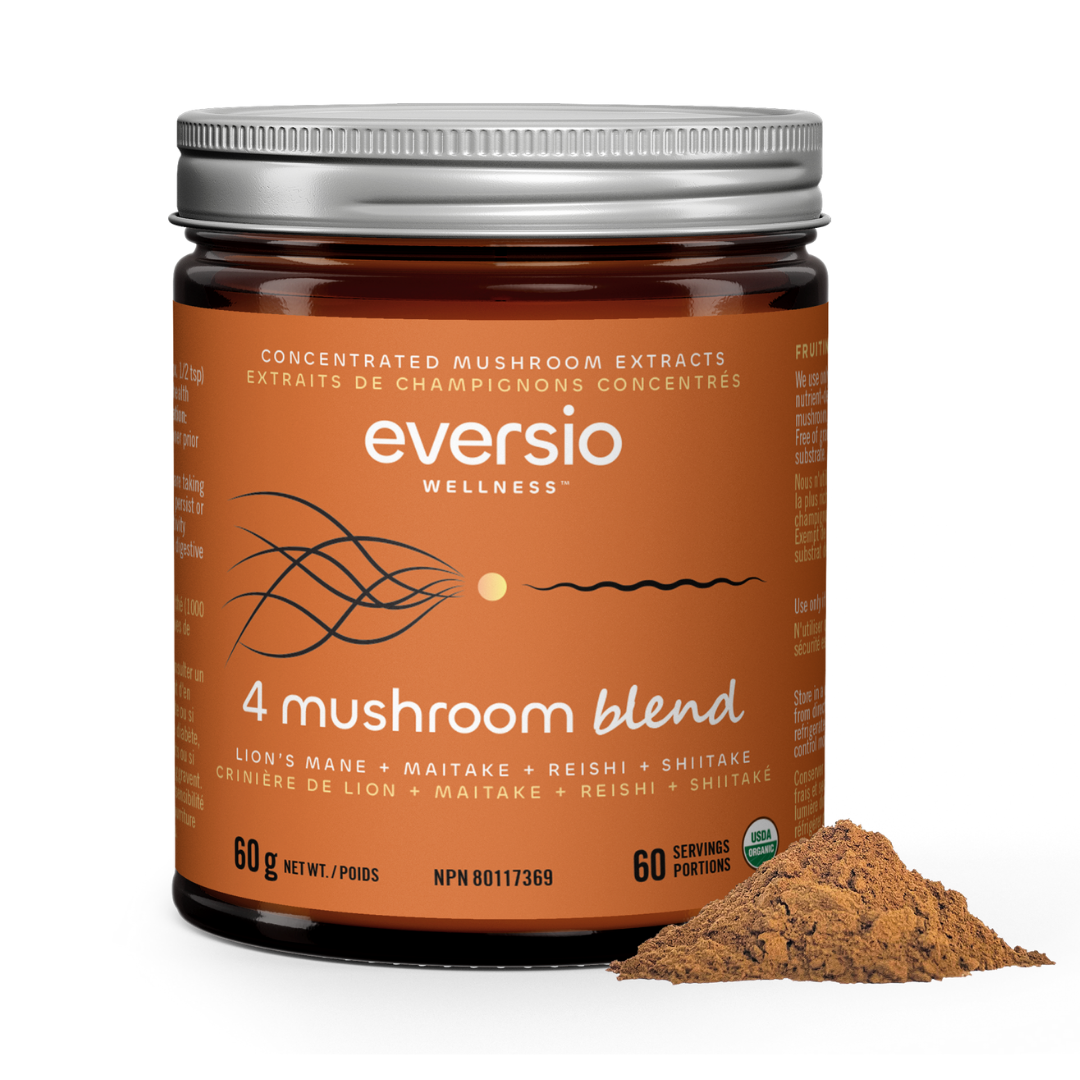
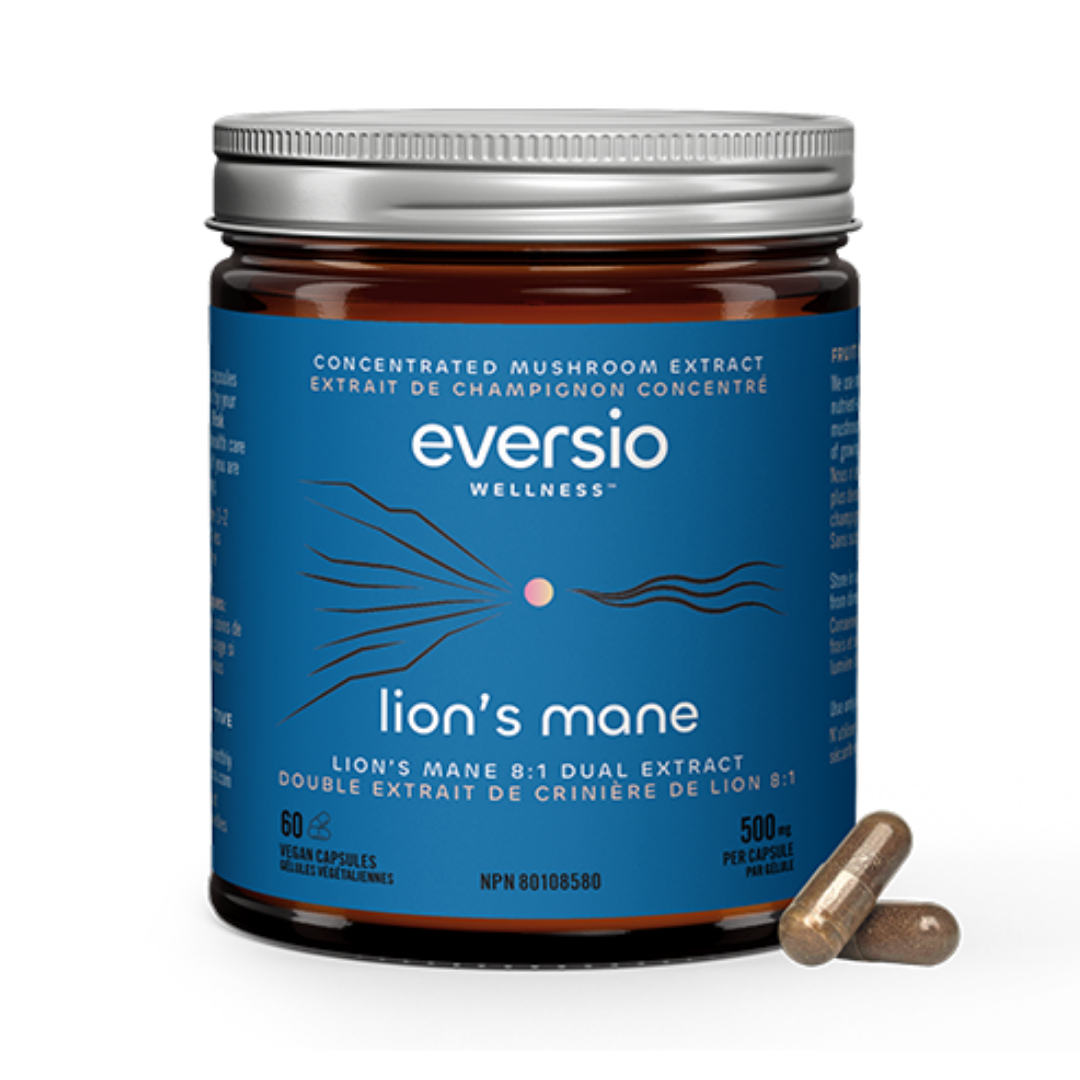
Lion’s Mane (Hericium erinaceus) is one of the most researched medicinal mushrooms for nervous system support.
You’ve probably heard it called “the brain mushroom.”
But here’s what matters:
- It doesn’t stimulate.
- It doesn’t override.
- It doesn’t push.
It supports repair.
And that distinction is everything.
The Science: How Lion’s Mane Supports the Brain
Lion’s Mane contains two unique compounds:
- Hericenones (found in the fruiting body)
-
Erinacines (found in the mycelium)
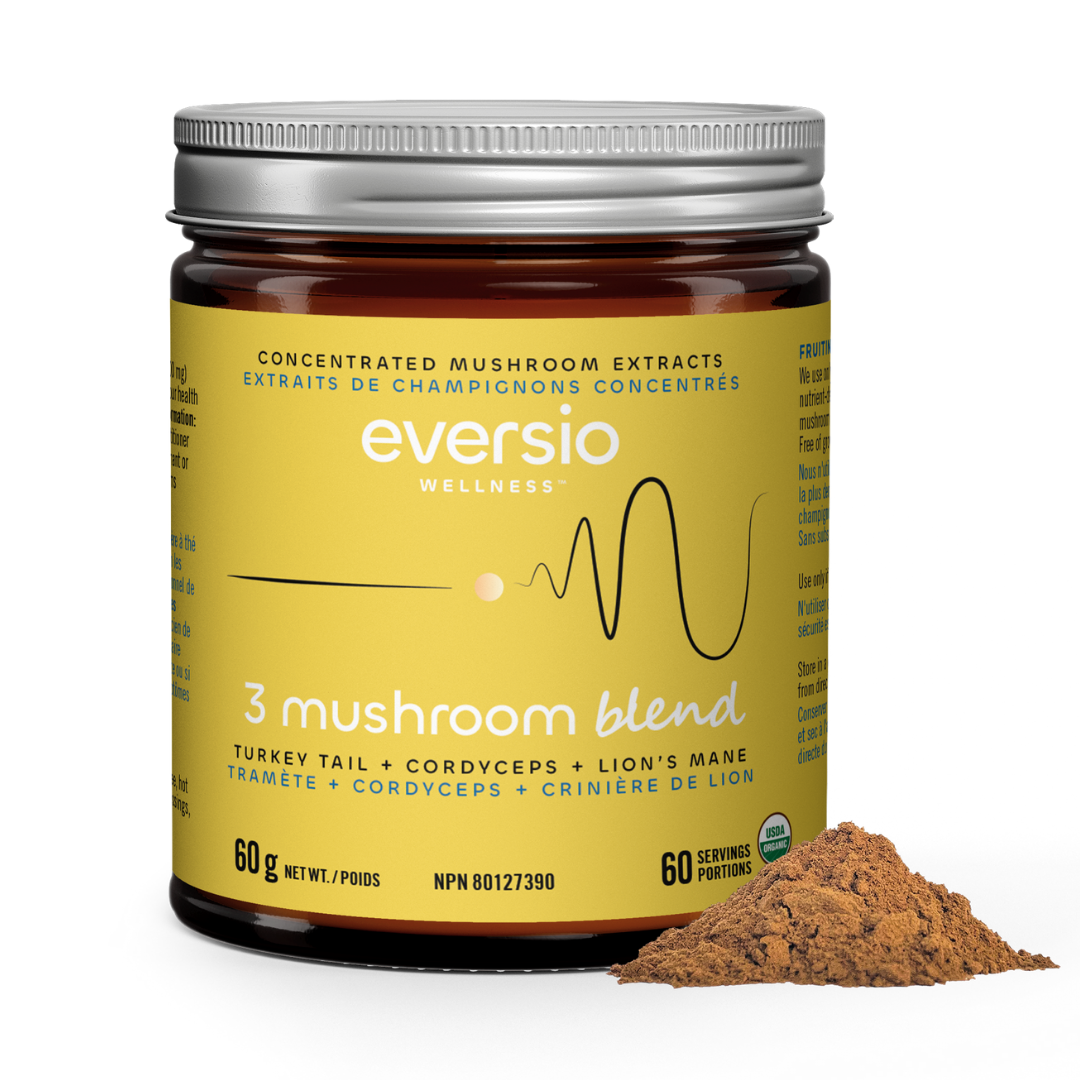
Most commercial products use myceliated grain (about 90% grain, 10% mycelium), which means erinacines are often negligible. If you’re taking Lion’s Mane for brain health, fruiting body, dual-extracted products are non-negotiable.
Why Dual Extraction Matters
Lion’s Mane must be:
- Fruiting body only
- Organic
-
Dual-extracted (hot water + alcohol)
Why?
Because hericenones (the compounds linked to nervous system repair) are alcohol soluble.
Without dual extraction, you’re missing the compounds most associated with:
- Neurotrophic activity
- BDNF support
- NGF (nerve growth factor) stimulation

Lion’s Mane and Brain-Derived Neurotrophic Factor (BDNF)
Let’s talk about something fascinating.
BDNF (brain-derived neurotrophic factor) is like fertilizer for your neurons.
Lion’s Mane has been shown to support:
- Nerve growth factor (NGF)
- BDNF expression
-
Neurite outgrowth (brain cell communication)
You have approximately 87 billion neurons in your brain.
Each neuron has 5,000–10,000 connections.
When we say Lion’s Mane promotes neurite growth, we’re talking about:
- Enhanced communication between brain cells
- Support for mood regulation
- Support for cognitive resilience
-
Support for emotional regulation
This is not stimulation.
This is nourishment.
Lion’s Mane and Anxiety in Menopausal Women (Clinical Study)
In a 2010 randomized, double-blind, placebo-controlled trial (Nagano et al.), menopausal women supplementing with Lion’s Mane showed:
- Reduced depression scores
- Reduced anxiety scores
-
Improved quality of life
Let that sink in.
Women are severely underrepresented in research.
And this study looked specifically at menopausal women.
Lion’s Mane wasn’t sedating them.
It wasn’t numbing them.
It was supporting regulation.

Lion’s Mane and Recurrent Depression (Case Study)
In a 2014 case study on recurrent depressive disorder, Lion’s Mane supplementation improved quality of life enough that (under medical supervision) a tricyclic antidepressant was discontinued.
This does not mean Lion’s Mane replaces medication.
It means:
When the nervous system is supported at the root, sometimes capacity shifts.
Burnout, Stress & The Wired-Tired Loop
Burnout sleep is not traditional insomnia.
It’s a nervous system that cannot downshift.
You feel exhausted.
But your body feels alert.
In a 2015 pilot clinical trial on female undergraduate students, Lion’s Mane supplementation was associated with:
- Improved sleep quality
- Reduced anxiety
-
Improved subjective well-being
Researchers measured salivary free MHPG, a marker related to norepinephrine metabolism and stress response.
Lion’s Mane appeared to support healthier turnover and regulation of stress hormones.
Translation?
It didn’t sedate the women.
It helped their nervous systems regulate.

Anti-Fatigue Without Stimulation
Here’s where people get confused.
Lion’s Mane is anti-fatigue.
But it is not stimulating.
That’s very different from caffeine.
Caffeine has an 8-hour half-life.
If you drink coffee at 2 p.m., half of it is still circulating at 10 p.m.
Stack that daily, and you get:
- Dependence
- Larger crashes
- Sleep disruption
-
Burnout cycles
Lion’s Mane supports metabolic health, lipid modulation, and nervous system resilience.
It nourishes.
It doesn’t whip your adrenals.
The Alzheimer’s Conversation We Need to Have
We have genes for Alzheimer’s in our family.
And what I learned through that journey changed everything for me.
Approximately 60 million people worldwide live with Alzheimer’s.
Around 70% are women.
And roughly 95% of cases are not purely genetic.
That means lifestyle and prevention matter.
Your brain fully develops around age 30.
After that, it is your job to protect it.
- Exercise is critical.
- Sleep is critical.
- Nutrition is critical.
And supporting nerve growth and communication may be part of that long-term strategy.

What Lion’s Mane Is Not
Let’s be clear.
It is not:
- A quick fix
- A stimulant
- A replacement for therapy or medical care
-
A miracle
It is:
- Nervous system nourishment
- Brain support
- Mood support
- Sleep-supportive through regulation
Practical Dosing & What to Look For
Maintenance Dose:
2–5 grams daily (quantity crude equivalent)
Therapeutic Dose:
4–8 grams daily (depending on product concentration)
Health Canada upper range: 12 grams quantity crude equivalent daily.
Label Checklist:
- Fruiting body only
- Dual extract (hot water + alcohol)
- Organic
- Transparent sourcing
-
Third-party testing
If it doesn’t say dual extract, you’re likely not getting hericenones.
And if you’re taking it for brain health?
That matters.

Sleep Returns When the Body Feels Safe Again
This might be the most important sentence in this entire article.
Sleep returns when the body feels safe again.
Lion’s Mane does not sedate.
It supports regulation.
And when the nervous system feels supported, the body can downshift.
If You’re Thinking “This Is Me”
I want you to hear this:
Your body isn’t broken.
It’s adapting.
The autonomic nervous system is constantly trying to bring you back to homeostasis.
- If you are in perimenopause…
- If you are burned out…
- If you feel wired and foggy and depleted…
You don’t need to do more.
Your nervous system needs nourishment.

Final Thoughts: A Different Way Forward
For years, I was trying to push through.
- More discipline.
- More productivity.
- More pharmaceuticals.
And it wasn’t until I slowed down, reduced noise, prioritized nourishment, and supported my brain intentionally that things began to shift.
Lion’s Mane was not the only thing.
But it was a meaningful piece.
If you are in a season where you don’t recognize yourself, maybe this is your invitation to:
- Lift heavy weights
- Get morning sunlight
- Sleep like it matters
- Eat whole, diverse foods
- Regulate caffeine
-
Support your brain intentionally
And if Lion’s Mane becomes part of that?
- Choose well.
- Choose transparently.
- Choose nourishment over stimulation.
You don’t need to do more.
Your nervous system needs support.
We are sending you so much love and light.
And we’ll see you next time. 🌿







Leave a comment
All comments are moderated before being published.
This site is protected by hCaptcha and the hCaptcha Privacy Policy and Terms of Service apply.