
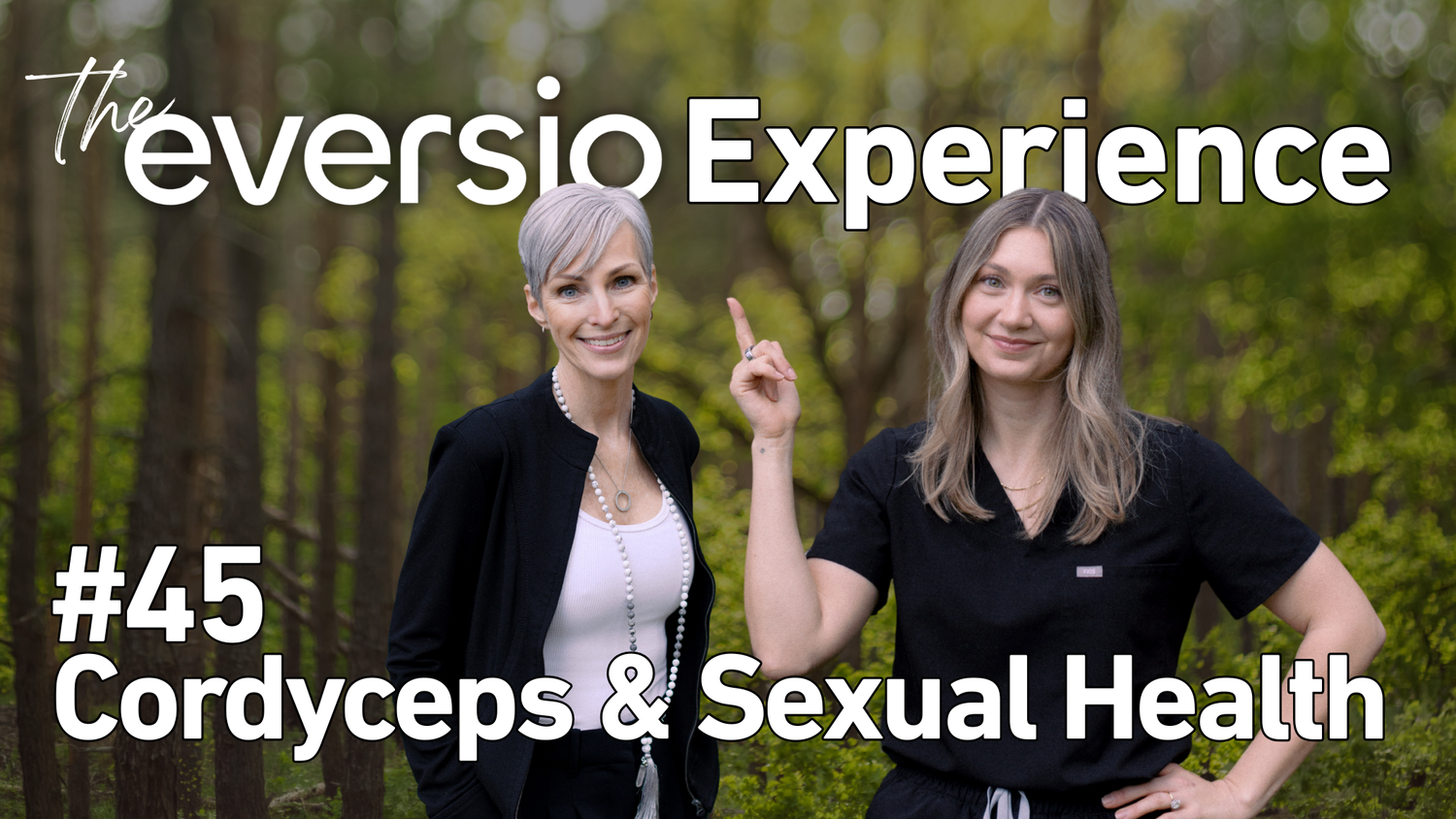


If you've been hanging around our community for a while, you know I love a topic that is equal parts spicy and sciency.
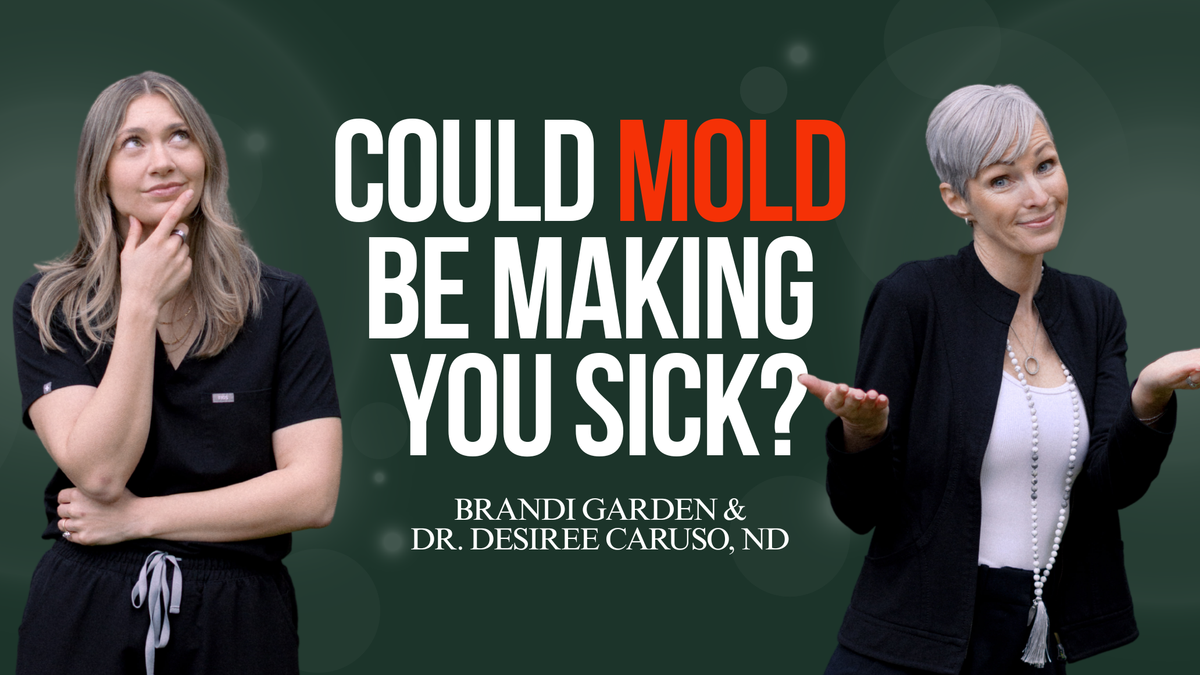
On a recent episode of The Eversio Experience Podcast, Dr. Desiree Caruso, our resident naturopathic doctor, and I sat down to talk about something that doesn't get nearly enough airtime in the functional mushroom world: cordyceps mushrooms for sexual health. We're talking libido, hormones, energy, fertility, and healthy aging, for both men and for women.
And here's what makes this episode different from a lot of what you'll find online: we grounded every single claim in peer-reviewed research.
I hear it all the time. Someone goes to their doctor, mentions medicinal mushrooms, and gets the response: "There's no research on that." It's one of our biggest pain points at Eversio, because the truth is there are over 7,000 papers on PubMed right now looking at functional mushrooms. Are they all good? No. Research quality varies and technology keeps advancing our ability to interpret it. But the science is real, it is growing, and today I want to share some of it with you.
Quick reminder before we dive in: this post is education only, not medical advice. Always work with your healthcare provider when making decisions about your health.

Why Does Cordyceps Even Come Up When We Talk About Sex Drive?
Before we get into the research papers, I want to answer the question I get asked constantly: why is a mushroom showing up in conversations about libido?
Dr. Desiree explained it beautifully. Cordyceps militaris is what's known as a tonic mushroom. A tonic isn't a quick fix. It's not caffeine. It doesn't hit you in an hour. A tonic works over time by helping your body feel stronger, more resilient, and more capable. Think of it as support for your energy, your stress response, your hormones, and your metabolism.
And here's the thing that changed how I think about libido entirely: it isn't just about hormones. It's about energy.
"If your body is exhausted, stressed, inflamed, or your blood sugar is a mess, libido usually disappears. And that is a normal body response." -- Dr. Desiree Caruso, ND
Did you catch that part about blood sugar? Because I want you to sit with it for a second. Your blood sugar could be contributing to a low sex drive. That's a big deal, and it's exactly why cordyceps is worth paying attention to as a whole-system support, not just a hormone hack.

Cordyceps for Men's Sexual Health: What the Research Shows
Let's start with the men. In this episode, Dr. Desiree and I reviewed a 2021 paper, Cordyceps militaris Fruiting Body Extract Decreases Testosterone Catabolism and Testosterone-Stimulated Prostate Hypertrophy, published in the journal Nutrients by a researcher named Kusama and colleagues.
The title sounds intense, so let's translate it into plain English, because that's exactly what we did on the podcast.
Testosterone Catabolism: Why Your Body Might Be "Leaking" Testosterone
This paper asks two core questions:
- Can cordyceps help the body keep testosterone from breaking down too fast?
- And can it do that without making the prostate grow larger?
Testosterone matters for so much more than just sex drive. We're talking about libido, energy, motivation, mood, muscle strength, and fertility. The men in my life talk about this constantly, and honestly, I think a lot of women are starting to pay attention to their testosterone levels too.
Catabolism simply means breakdown. So testosterone catabolism is the rate at which your body breaks testosterone down and clears it out. Here's what matters: if your catabolism is high, your testosterone levels can drop faster, even if your body is still producing it.
The Kusama paper suggests that cordyceps militaris fruiting body extract may decrease testosterone catabolism. In other words, it may help your body hold on to testosterone longer. Dr. Desiree describes it as helping your body "stop leaking testosterone too fast."
This is huge because it's not about forcing your body to do something unnatural. It's about supporting what your body wants to do on its own. And for the many people in our community who are considering hormone replacement therapy, it offers a compelling conversation to have with your doctor about natural pathways worth exploring first.

Understanding Andropause: The Male Menopause Conversation We Need to Have
As men age, testosterone tends to decline slowly. This shows up as lower sex drive, fatigue, depression, muscle weakness, and body aches. Clinically, this is sometimes called LOH, or Late Onset Hypogonadism. If you break that down: late onset means it happens later in life, hypo means low, and gonadism refers to the sex glands, so the testes in men.
In everyday terms: testosterone output is getting lower with age, and with it, libido often follows.
DHT, Prostate Health, and Why Balance Matters
The paper also looks at DHT, or dihydrotestosterone. Think of testosterone as a regular key. DHT is like a master key. It activates certain "locks" in the body more powerfully. DHT matters for sexual function, but it's also involved in prostate growth and hair loss, so you don't want it running unchecked.
A common fear men have is this: if I support my testosterone, will my prostate grow? Prostate hypertrophy, or BPH (benign prostatic hyperplasia), is extremely common in older men and can cause symptoms like frequent urination, a weak urine stream, and waking up at night to pee.
What the Kusama paper suggests is that cordyceps militaris may support testosterone status while also helping protect against the prostate enlargement signal. That's what makes it so compelling. It's potentially addressing both sides of the equation at once.

Whole Fruiting Body Extract vs. Isolated Cordycepin: Why It Matters
One of the most important takeaways from this paper is about the form of cordyceps you're taking.
The researchers found meaningful differences between using the whole fruiting body extract and using isolated cordycepin. Cordycepin is one of the active compounds in cordyceps militaris, and yes, we test for it in our products because the research on it is significant. But we don't isolate it. We show that it's present as part of the whole.
Why? Because cordyceps isn't one magic chemical. It's a full orchestra. When you isolate a single instrument, you lose the symphony. In fact, Kusama's team found they got the opposite effect they were hoping for when they isolated cordycepin alone. That's a significant signal that the whole fruiting body matters.
This applies across all functional mushrooms we work with at Eversio. The research on isolated compounds doesn't consistently outperform the whole extract, and in some cases it underperforms. Always look for whole fruiting body extracts.

Cordyceps for Women's Sexual Health: Menopause, Metabolism, and More
Now let's talk about women, because the research here is just as exciting and, frankly, still underrepresented in the broader functional medicine conversation.
The second paper Dr. Desiree and I reviewed was published in 2022 by Yong and colleagues in BMC Complementary Medicine and Therapies. It's titled: System Level Investigation of Anti-Obesity Effects and the Potential Pathways of Cordyceps militaris in Ovariectomized Rats.
The title is a mouthful, so again, let's translate. Ovariectomized rats means the rats had their ovaries removed, which eliminates estrogen production and creates a low-estrogen state similar to menopause. This makes it a useful model for exploring what happens to a woman's body and metabolism during the menopausal transition.
The Menopause Middle: What's Really Going On Metabolically
I see the term "menopause middle" all over social media, and honestly, I find it creates a terrible image for women. But let's talk about what's actually happening underneath.
The researchers specifically investigated anti-obesity effects of cordyceps in this menopause model and found that cordyceps militaris prevented weight gain and fat accumulation in the ovariectomized rats. But more importantly, they looked at why, and that's where it gets fascinating.
If you're gaining weight, feeling inflamed, exhausted, or dealing with unstable blood sugar around menopause, your libido is likely disappearing. And as Dr. Desiree reminded me on the podcast: nothing is wrong with you. Your body is in survival mode.

Estrogen Receptor Signaling: The Lock and Key Analogy That Changed How I Think About This
This is the part I find most exciting. The paper explored estrogen receptor signaling, specifically ER alpha, or estrogen receptor alpha.
Think of it this way: a receptor is like a lock on a cell. Estrogen is the key. When estrogen drops in menopause, many of those locks stop getting activated the same way they used to. That affects hot flashes, mood, vaginal dryness, and yes, libido.
The researchers suggested that cordyceps militaris can show estrogenic agonist activity, meaning it may help activate estrogen receptor pathways. This is not hormone replacement. But it is suggesting that cordyceps may influence estrogen signaling in ways that are very relevant during menopause.
The Liver, Blood Sugar, and Why Everything Is Connected
The paper also explored liver health in the context of menopause, including something called liver hypertrophy, or enlargement often linked to fat accumulation and metabolic stress. You might know this as non-alcoholic fatty liver disease.
When I asked Dr. Desiree why we're talking about the liver in an episode about libido, her answer was clear: because the liver helps process hormones, plays a major role in blood sugar, manages inflammation, and drives detoxification. If the liver is sluggish, hormones get messy.
Everything is connected.
The researchers also looked at the PI3K/AKT signaling pathway, which is essentially one of the body's main communication highways telling cells how to use glucose, store fat, survive stress, and regulate metabolism. Think of it as a metabolism control center.
They further explored genes related to glucose regulation and insulin sensitivity. Here's the short version: insulin is a hormone that moves sugar from your blood into your cells for energy. When insulin resistance develops, that door stops opening properly. Sugar stays in the blood. The result? Fatigue, cravings, inflammation, weight gain, and yes, a disappearing libido.

Cordyceps as a Full Team, Not a Solo Act
What the Yong paper highlights is that three key compounds in cordyceps, corticipin, adenine, and guanosine, appear to affect different pathways. They're not all doing the same job. Cordyceps acts like an entire team supporting your hormones, your metabolism, and your energy all at once.
Most people come to cordyceps for the energy. And yes, it delivers on that. But what I want you to walk away understanding is that the energy piece is just one player on a much bigger team.
An important caveat from Dr. Desiree: the researchers didn't directly measure libido in this study. But it does provide strong mechanistic evidence that cordyceps may support the systems that influence libido during menopause, including energy, weight regulation, blood sugar balance, and estrogen signaling.
How to Actually Use Cordyceps for Best Results
If you're thinking about trying cordyceps, or you're already taking it and wondering if you're doing it right, here are the practical tips Dr. Desiree shared on the podcast:
- Take it consistently for 6 to 12 weeks. If you're not taking it for a minimum of six weeks, you really can't evaluate whether it's working. The research on functional mushrooms supports consistent and prolonged use.
- Take it earlier in the day. Cordyceps has energizing properties. Taking it in the morning lets you carry that sustained energy through the day without it affecting your sleep.
- Always choose whole fruiting body extracts. As we covered above, the research consistently points to the whole extract outperforming isolated compounds.
- Pair it with protein and strength training. Many people are using cordyceps as a natural pre-workout. Pairing it with a protein-rich meal and resistance training helps optimize muscle mass and exercise capacity, both of which support hormone health.
- Address your sleep and stress. Libido needs safety. You can't out-supplement a body that's running on empty and chronically stressed.
"You mean I have to do the boring basics, Dr. Des?" That's what I said on the podcast. And her answer? Yes. They are the foundations of health. Cordyceps supports those foundations. It doesn't replace them.
 Why Libido Matters More Than We've Been Taught
I want to close with something personal, because I think it's the most important part of everything we discussed.
Libido matters. And I don't mean that in a superficial way. A healthy sex drive is often a powerful signal that the body and the spirit still feel alive, connected, and well. It reflects healthy hormones, good circulation, nervous system balance, emotional connection, and even confidence and self-worth.
In long-term relationships like the one I'm so lucky to have with my husband, libido helps intimacy and bonding stay alive. And that intimacy, in turn, supports mental health and reduces loneliness. We are in the middle of a loneliness epidemic on this planet right now, and that matters deeply to me.
On a physical level, libido supports better sleep, stress relief, and improved mood through the release of feel-good brain chemicals like dopamine and oxytocin.
Libido isn't "extra" in later life. It is often a mirror of your overall vitality.
I've always believed there's a mushroom for every moment. And I also believe that our deepest purpose is to love and be loved. For me, cordyceps supports that energy at its core.








Leave a comment
All comments are moderated before being published.
This site is protected by hCaptcha and the hCaptcha Privacy Policy and Terms of Service apply.