


You have done the work. The books, the retreats, the morning routines, the therapy sessions that cracked something open. You have started over on a Monday with genuine conviction. And for a while, sometimes days, sometimes weeks, something shifted.
And then it didn't hold.
If that cycle is familiar to you, this is not a post about trying harder. This is about understanding the biological mechanism that no one has bothered to explain to you yet. Because when you understand what is actually happening, it stops feeling like a personal failure. It starts to feel like a solvable problem.
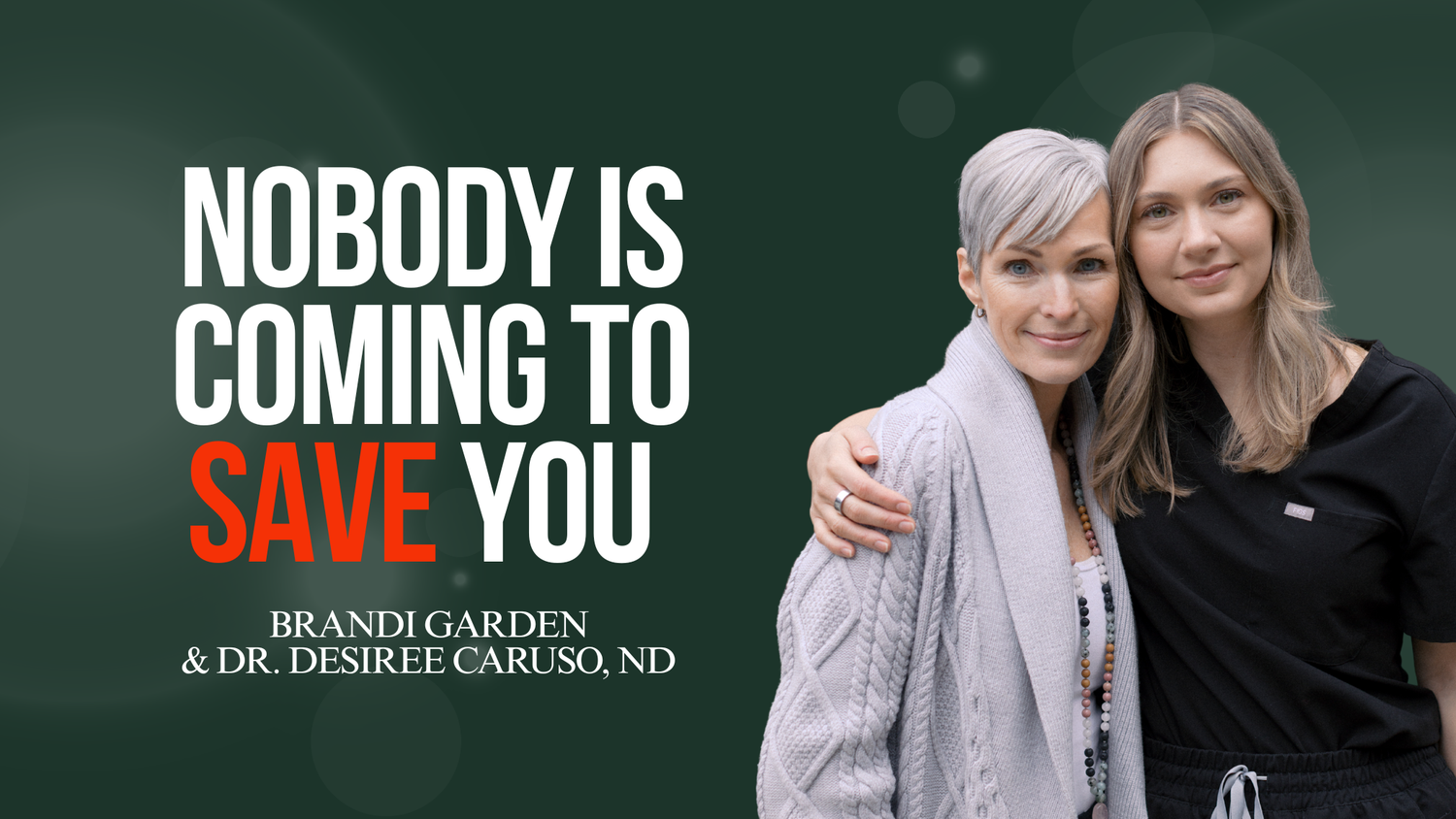
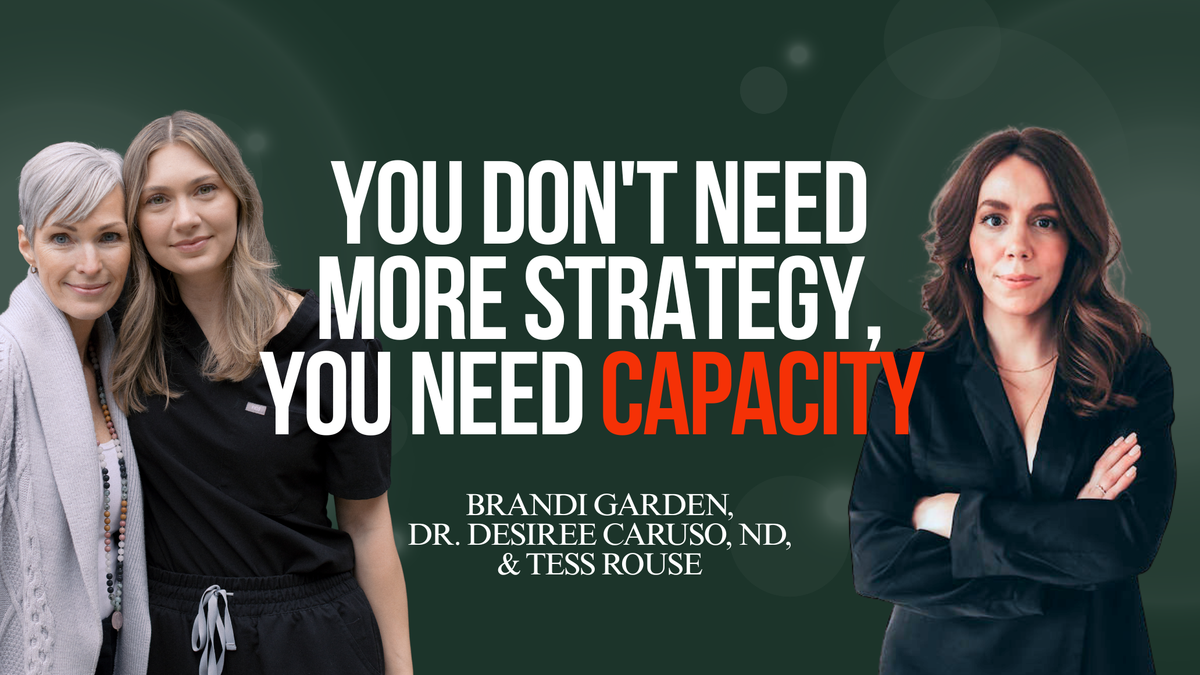
That is what Brandi Garden and Dr. Desiree Caruso, ND cover in this episode of The Eversio Experience, and it is one of the most important conversations they have had on the show.

The Nervous System Is Not Broken. It Is Doing Its Job.
When your nervous system has been running in a state of chronic stress for a sustained period, elevated cortisol, persistent hypervigilance, a body that has learned that urgency is normal and calm is suspicious- something predictable happens. It will always reach for the external solution.
Not because you are weak. Because in that state, stillness does not feel like rest. Stillness feels like a threat.
The nervous system searches. It moves you toward the next program, the next practitioner, the next approach. And there is a real neurological reason that beginning feels like relief: novelty creates a genuine response in the body. A new start produces a real shift in the moment.
But then the novelty wears off. The system returns to its calibrated state. And the searching starts again.
This is why the cycle feels so demoralizing. The effort is real. The hope is real. The brief windows of change are real. And then the return to baseline is also real. It starts to feel like evidence that change is not possible. But Dr. Desiree is clear on this: it is not evidence of that. It is evidence of a nervous system doing exactly what it was built to do, returning to what it knows as safe.
There is a massive difference, as Brandi puts it, between "I cannot change" and "my system is currently calibrated for a version of me I am ready to leave behind." One is a verdict. The other is a starting point.
Your Body Can Become Addicted to Stress Hormones
This is a piece of the biology that most people never hear. When you have been running on cortisol and adrenaline long enough, your cells develop more receptor sites for those hormones. Your body begins to anticipate them. And when stress levels drop, your system will unconsciously generate the conditions to bring them back.
You will start looking for the problem. The difficult coworker. The low-grade dread. The familiar sense of bracing. It registers as safe to your nervous system, even when it is painful, because it is familiar.
This is why someone can leave a relationship that clearly was not working and walk straight into one that is almost identical. This is why a breakthrough at a weekend retreat can feel complete and then evaporate within two weeks of being home. It is not a failure of will. It is homeostasis doing its job.
The 90-Second Rule
Dr. Jill Bolte Taylor is a neuroanatomist who experienced a major stroke and spent years studying the recovery of her own brain. What she identified about emotion is worth sitting with.
The chemical experience of an emotional reaction in the body lasts 90 seconds. That is how long it takes for the emotion to move through and flush from your bloodstream. Everything after that is a thought you are choosing to think that re-triggers the response.
If you have been angry for a week, consider how many times you did that to yourself. The physical effect of the original emotional response was over. Everything past those 90 seconds was a choice, conscious or not, to keep firing that circuit.
The story you tell yourself about a situation is what sustains the emotional state. Not the original emotion.
Buddhism arrived at the same truth over 2,000 years ago. The teaching of the second arrow: pain happens; that is the first arrow, and you cannot always choose whether it lands. But suffering, the kind that compounds and replays and becomes a permanent state rather than a passing experience, that is the second arrow. The one you shoot yourself every time you retell the story.

You Cannot Think Your Way Into a New Nervous System
This is the piece that Dr. Desiree says almost never gets talked about, and she believes it is the real reason external fixes do not produce lasting change, even when they are genuinely good things.
You cannot read your way into a new nervous system. You cannot understand your way there. The nervous system learns through experience, through repetition, through actually practicing the felt sense of a new state. Insight happens in the mind. But the nervous system was not part of that conversation. And until it is, the old wiring stays dominant.
Hebb's Law, sometimes called Hebian Law, explains what happens when you repeat an emotional loop over and over: neurons that fire together wire together. Every time you run that pattern, you make the pathway more automatic, more like a default setting. You are building neurological infrastructure for the state you keep returning to.
This works in your favour too. Every time you practice a new emotional state, a new way of responding, you are building new neural architecture. The old pathways do not disappear immediately, but they get quieter, like a path through the woods that you are no longer walking. The new ones grow stronger.
The Space Between Stimulus and Response
Viktor Frankl, who survived the Nazi concentration camps and became one of the most important voices in 20th-century psychology, wrote something that Brandi returns to more than almost anything else she has read: "Between stimulus and response, there is a space. In that space is our power to choose our response. In our response lies our growth and our freedom."
Every external fix tries to change the stimulus. Or numb the response. But it never touches that space in between. That space is the only territory where anything actually changes.
The Stoic philosopher Epictetus said something similar 2,000 years earlier: it is not the events that disturb us, but our judgments about the events. And yet as a culture, we continue to pour enormous energy into managing the events rather than examining the judgments.
The Reticular Activating System and What You Are Filtered to See
There is a network of neurons in your brain stem called the reticular activating system, or RAS. It determines what reaches your conscious awareness out of the enormous amount of sensory data your brain receives each second. The primary thing that sets that filter is what you have already come to believe is true about yourself and the world.
If at the core you believe you are someone things happen to, your RAS is actively filtering reality for evidence of that. It surfaces the information that confirms the story and screens out information that would challenge it.
Shift the belief, and the filter shifts. You begin to notice different things. Different people. Different possibilities. Not because the world changed. Because what you are available to perceive has changed.

Mental Rehearsal: The Neuroscience Underneath the Vision
Elite athletes have used this for decades. The practice of vividly imagining a future experience in enough sensory detail activates many of the same neural pathways as actually living it.
To a meaningful degree, your brain cannot distinguish between a vividly imagined future and a real experience. Which means you can become neurologically familiar with a version of yourself that does not yet exist in your daily life. You can practice being that person before you are that person. And your brain will begin to treat that state as home.
When Brandi talks about conscious creation, this is the neuroscience underneath it. The external evidence follows the internal state. But the internal state has to come first.
The Identity Question That Changes Everything
You cannot out-action your identity. You can layer on every habit, every protocol, every practice. But if at the core you still believe you are someone things happen to, those actions will eventually circle back to confirm that belief. Behaviour follows identity. It is not the other way around.
The work is identity-level. It is asking: who do I need to decide I am for this to become true? And the decision comes first. Not the evidence. Not the proof. James Allen wrote in 1903, in As a Man Thinketh: "You are today where your thoughts have brought you. You will be tomorrow where your thoughts take you."
Staying in the pattern is a decision. Reaching for the next external fix instead of turning inward is a decision. And if staying stuck is a choice, then so is changing.
Where to Go From Here
This episode is for the person who has been trying everything and is exhausted from the search. If that is you, the invitation is not to try harder. It is to understand the mechanism, stop waiting for external evidence to arrive before you decide who you are, and start building the internal experience of the version of yourself you are choosing to become.
Your nervous system learns through repetition. Train it well.








Leave a comment
All comments are moderated before being published.
This site is protected by hCaptcha and the hCaptcha Privacy Policy and Terms of Service apply.