


Most people who have lived with psoriasis have heard a version of the same advice. Moisturize more. Try this cream. Avoid stress. Eat better. Some of that advice is useful. A lot of it misses the point entirely because it treats psoriasis as a skin problem.
It isn't.
Psoriasis is an autoimmune condition that shows up on the skin. The distinction sounds semantic. It isn't. Understanding what's actually driving those patches changes how you think about supporting your body, which treatments make sense, and why certain natural compounds like chaga mushroom are worth paying serious attention to.
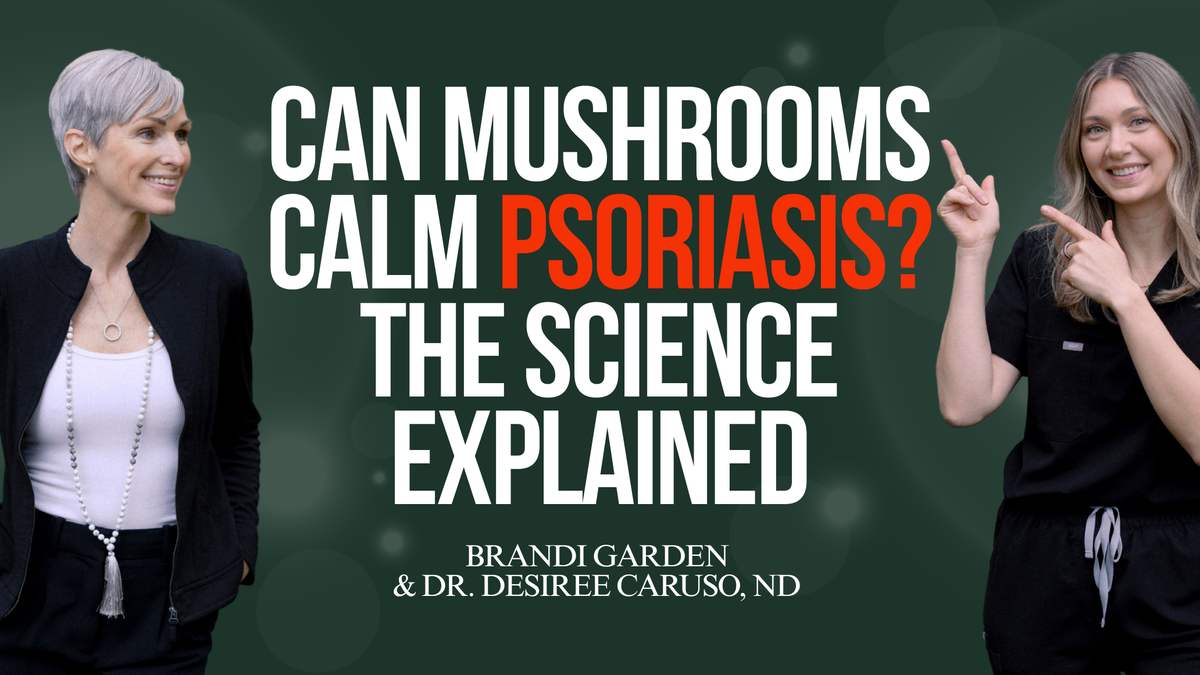
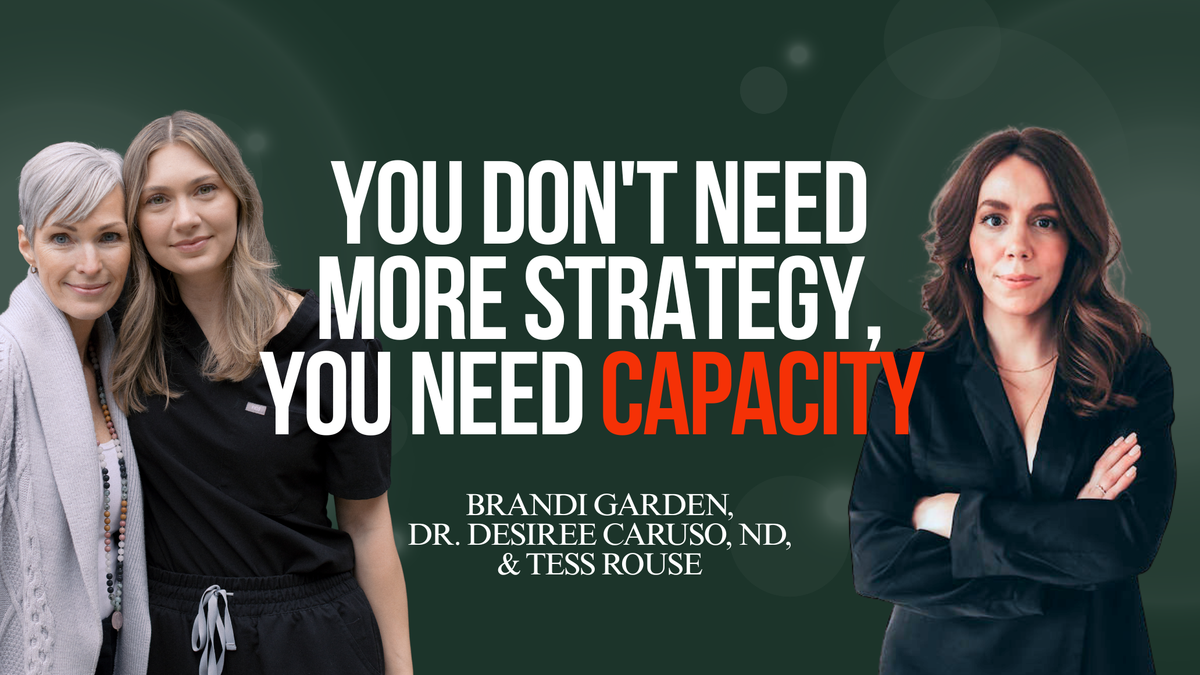
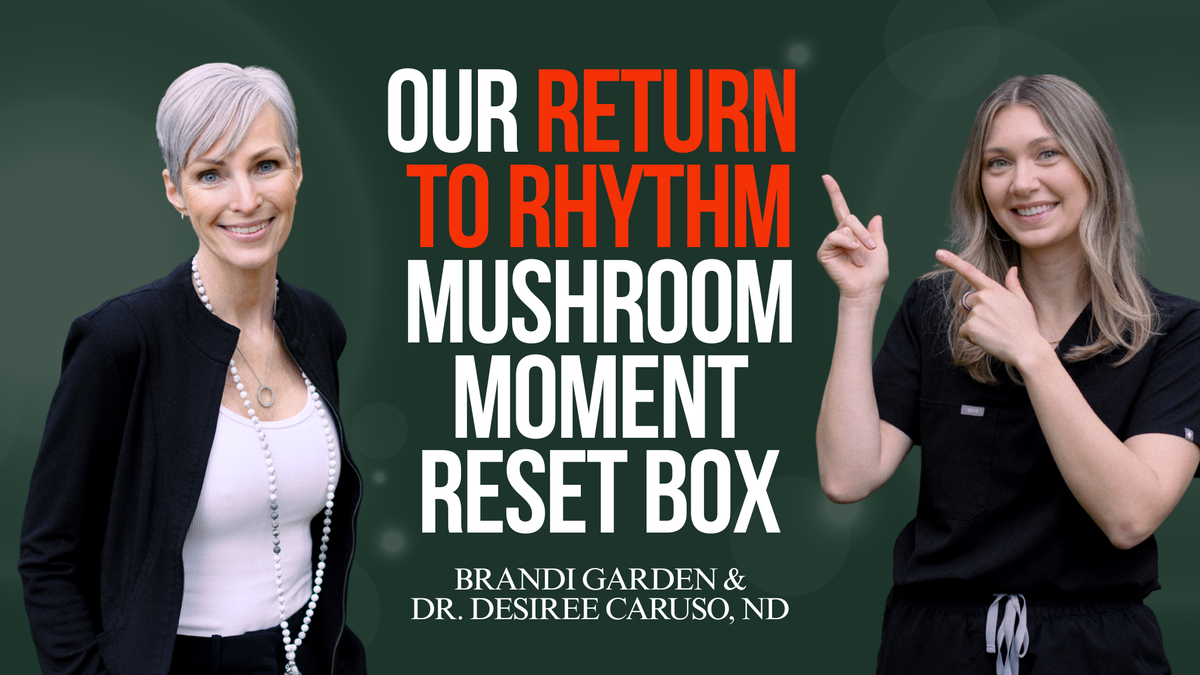
This is Part 1 of our Skin Series on The Eversio Experience. In this episode, Brandi Garden shares her personal history with psoriasis starting at age 15, a decade-plus on a pharmaceutical biologic, and what eventually shifted. Dr. Desiree Caruso, ND, breaks down the biology so clearly that by the end, the mechanism is no longer abstract. Below is a breakdown of what we covered.
What Is Actually Happening During a Psoriasis Flare
Under normal conditions, your skin cells go through a full life cycle over about 28 to 30 days. They develop deep in the skin, mature, rise to the surface, and shed. In psoriasis, that timeline can collapse to 3 to 7 days.
The reason comes down to the immune system. Something triggers immune cells in the skin to produce a signalling molecule called interleukin-23 (IL-23). IL-23 then tells a specific population of immune cells, called TH17 cells, to release IL-17. IL-17 lands on skin cells directly and tells them to multiply faster while producing their own inflammatory signals. The immune system activates the skin. The skin fires back more inflammatory signals. The cycle sustains itself.
This feed-forward loop is why psoriasis doesn't just resolve on its own in many cases. It has its own momentum. It also explains why some of the newer pharmaceutical treatments specifically target IL-17 and IL-23. Understanding this pathway changed how the condition has been treated over the last decade.
The Oxidative Stress Piece That Gets Overlooked
There's a second layer to the psoriasis picture that doesn't get nearly enough attention: oxidative stress.
Your body produces reactive oxygen species, sometimes called free radicals, as a normal byproduct of metabolism and immune activity. Healthy antioxidant systems neutralize them, and balance holds. In psoriasis, that balance tips. Research has consistently found elevated oxidative stress markers in psoriatic skin and in the bloodstream of people with the condition, alongside reduced levels of the body's own antioxidant defences.
A review published in the International Journal of Molecular Sciences was explicit on this point: oxidative stress in psoriasis is not a side effect of the disease. It is a contributing factor in the disease process itself. It feeds back into the inflammatory cycle, further activating the same immune pathways and contributing to the cell damage that keeps the whole loop going.
This distinction matters when we get to chaga.

The Five Types of Psoriasis (And Why Many People Don't Recognize Their Own)
Plaque psoriasis is the most recognizable form, making up roughly 80 to 90 percent of cases. It's the raised, red, silvery-scaled patches typically seen on elbows, knees, the scalp, and lower back. But it is one of five distinct types.
Guttate psoriasis shows up as small drop-shaped spots, often triggered by a strep infection, and appears more frequently in children and younger adults. Inverse psoriasis develops in skin folds — the underarms, groin, or under the breasts — and looks smooth and red rather than scaly because moisture changes how it presents. Pustular psoriasis involves small pus-filled blisters. Erythrodermic psoriasis is rare but serious, covering most of the body and capable of becoming a medical emergency.
Many people don't recognize their own condition because it doesn't match the elbow-patch image shown in pharmaceutical ads. The underlying immune mechanism, centred on that IL-23/IL-17 axis, is shared across most subtypes. But how it presents on the body can look very different from person to person.
The Mental Health Cost Is Not a Side Effect
An estimated 60 to 125 million people worldwide live with psoriasis. Across a large analysis of 56 studies published in the journal Psychiatry Research, roughly one in five adults with psoriasis experience depression, and a similar proportion experience anxiety. Between 78 and 89 percent of patients in quality-of-life studies report that psoriasis meaningfully affects their day-to-day life.
Clinical guidelines in the UK now recommend that dermatologists actively screen for depression and anxiety when assessing psoriasis severity.
There is also a physiological loop at work here: stress hormones can influence immune signalling, including some of the pathways that drive psoriasis. The stress of managing a visible, unpredictable condition can, for some people, become part of what perpetuates the flares. This is not anecdotal. It is documented.

Why Chaga Maps to This Condition
Chaga (Inonotus obliquus) is not a mushroom in the way most people picture one. It grows as a hard, charcoal-like mass on birch trees, primarily in cold northern climates across Siberia, Russia, and Canada. It has been used since at least the 16th century in Russia and Siberia, brewed as tea or tincture for immune resilience and general vitality. Some indigenous groups across Canada used it as a restorative. Writing attributed to Hippocrates describes infusions of birch fungus used to care for skin wounds.
Modern research is now filling in why these traditional uses made sense. And what it's finding lines up with exactly what we just described about psoriasis.
Antioxidant capacity. Chaga has one of the highest measured antioxidant capacities of any natural substance researchers have tested, measured using the ORAC (oxygen radical absorbance capacity) scale. For a condition where oxidative stress is a documented contributing factor, this is not a peripheral benefit. It is directly relevant.
Immune modulation. Chaga's polysaccharides, including beta-glucans, have been studied for their effect on TH17 and T regulatory cell balance. A study conducted in the context of colitis found that chaga polysaccharides helped rebalance that ratio. TH17/T-reg balance is not gut-specific. It is a universal immune regulatory system implicated across multiple inflammatory and autoimmune conditions. A compound that helps move it toward a more regulated state is relevant to psoriasis, where TH17 overactivation is the central driver.
TNF-alpha modulation. Research on chaga extracts and macrophage activity has found that a dual-extracted chaga can meaningfully influence the release of TNF-alpha and other inflammatory molecules like interleukin-1 beta. TNF-alpha is, notably, the very target of the class of biologic drugs Brandi took for over a decade.
Topical evidence. A 2025 study applied a chaga extract topically in a mouse model of atopic dermatitis, a different inflammatory skin condition. Researchers found it significantly improved dermatitis severity scores, reduced oxidative stress markers directly in the skin, calmed inflammatory cytokine activity, and modulated TNF-alpha. This is chaga's anti-inflammatory and antioxidant action showing up in real skin tissue.
The Gut-Skin Axis
Research into the gut microbiome in psoriasis patients has found consistent differences in gut bacterial composition compared to people without the condition, including lower levels of short-chain fatty acid-producing bacteria. These bacteria help regulate inflammation throughout the body, well beyond the digestive tract. When that balance shifts, it can contribute to the same systemic inflammatory tone that shows up on the skin.
A meta-analysis of over 1,000 participants found that probiotic interventions measurably improved psoriasis severity scores. What happens in the gut does not stay in the gut.
Chaga's polysaccharides have been studied for what researchers call a bifidogenic effect, meaning they may support the growth of beneficial bifidobacteria in the gut. The research here is early. But it adds a layer to chaga's relevance for psoriasis that goes beyond antioxidant and immune support.

What to Look For in a Chaga Product
Not all chaga products are the same, and the differences matter.
Chaga's beta-glucans are water-soluble. They come through in a hot water extract. But triterpenes, including betulinic acid, which is specific to chaga and originates in the birch tree itself, require alcohol extraction. A single-method extract or a simple chaga tea will not deliver the full range of compounds. A dual extraction process using both hot water and alcohol is what captures both sides.
When choosing a product, look for: whole fruiting body (not mycelium grown on grain, which lacks the precursors to chaga's most active compounds), dual extraction, beta-glucan percentages listed on the label, third-party lab testing, and organic certification.
Those criteria alone, as Dr. Desiree noted, would remove most of what's currently available on store shelves.
The Bottom Line
We are not saying chaga cures psoriasis. Chaga calms oxidative stress. It helps regulate the same immune cells involved in psoriasis. And it can produce measurable results when tested directly on inflamed skin. Used consistently, as a daily practice rather than a flare-only response, and alongside proper diagnosis, stress management, sleep, gut support, and professional care, it is a well-reasoned addition to the picture.
This is Part 1 of three. Part 2 is eczema. Part 3 is acne. Each condition points to a different mushroom, and each conversation is its own.






Leave a comment
All comments are moderated before being published.
This site is protected by hCaptcha and the hCaptcha Privacy Policy and Terms of Service apply.