


You've probably started a workout plan with total commitment. New program, new playlist, maybe new shoes. You told yourself this was the one.
And then life happened, a week got busy, and the plan quietly disappeared.
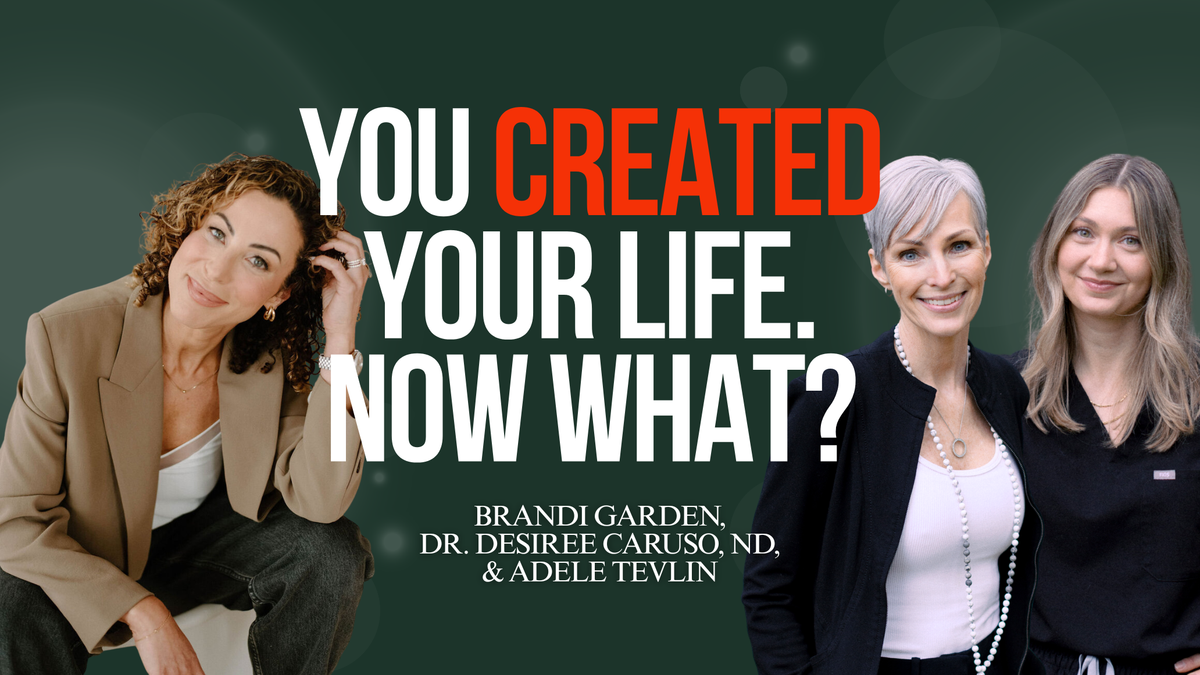
If that sounds familiar, the problem probably isn't your willpower. On this week's episode of The Eversio Experience Podcast, we sat down with Jenn Pike, Medical Exercise Specialist, Functional Diagnostic Nutritionist and founder of the Synced movement community, to talk about why movement so often feels like a chore, and what actually makes it stick.
Why this conversation matters right now
Most of us know movement matters. That's not the gap. The gap is between knowing and doing, consistently, for years.
Jenn has been teaching group fitness since she was 17. In 30 years, she has watched the same patterns play out across thousands of people. Some stop too soon. Some push long past the point where their form gave out. Many never start because the gym doesn't feel like a place they belong.
What follows are the ideas from our conversation that we think can change how you move this week.
Movement isn't an appointment
Jenn opens with something that stopped us. From the time we're kids, she said, we're taught that movement is something you go and do. Gym class. Gymnastics. A booked session. It has a start time and an end time.
But at our core, we're built to move. Nobody feels good after sitting all day. And the belief that movement has to be structured, rigid, and painful to count is one of the biggest reasons people avoid it.
Her reframe: movement is how she comes home to herself. For some people that's a strength class. For others it's a walk, a hike, yoga, or even breathwork. The form matters less than whether it brings you back to your body.

Train by how you feel, not just by the plan
Jenn's own training has changed a lot. Early on she followed what was modeled for her: classic group aerobics, then a machine and barbell routine with a five-day body-part split.
Then life changed. She had her kids at 26 and 28, opened a business, and by her mid-30s her body didn't respond well to being pushed the same way every day. She started noticing that her energy, mood, appetite, and sleep shifted at different points in the month, and she adjusted her intensity to match.
The result surprised her. She did less, but more intentionally, and got better results.
Today, at 47, her focus has shifted again. Her energy is shaped by more than her hormonal rhythm now, so her question has become: How do I want to feel as I age? Her answer is strong, with a good reserve of muscle, moving well and feeling confident. That's what Synced is built around: some days heavier and more intense, the next day still moving but with more recovery.
A few things you can take from this:
- Your training can change as your life changes. That isn't failure.
- Intensity can rise and fall across a week. Movement can be daily even when load is not.
- If life is asking a lot of you right now, meeting a depleted body with "push harder" may lead to injury and frustration instead of results.
The rep you're not doing
Here's the moment from the episode we can't stop thinking about.
Jenn says that, again and again, people stop right before the stimulus arrives. They feel something uncomfortable, or they hit the prescribed number, and they're done.
Her question: If you got to 12, you can still talk, and your form is still clean, why are you stopping at 12?
She's clear that this isn't about grinding through 40 more. Often there are two, three, five reps still available. Building muscle requires enough of a stimulus. She also explained that progressive overload doesn't mean lifting heavier every single workout. With good training, there's a point where the load you can handle with quality form stays the same for months, sometimes years, and you change the intensity in other ways.
And then there's the opposite person. The one whose knees are caving in, whose back is rounding, who keeps going because "I don't quit anything in my life." Jenn's job there is to help them stop.
Her two most common cues in class: Can you slow down? Are you breathing?
Safety comes before strength
Dr. Desiree shares why this hits close to home. As a university athlete, she was rear-ended by a semi-truck while at a complete stop. A series of concussions followed, along with post-concussive symptoms and a cervical spine she describes as being in total freakout.
She was used to the rigid, regimented world of high-performance sport. What she found in recovery was that the rehab exercises weren't the main barrier. Her nervous system was. Every time she walked into a gym, her body braced.
What changed things:
- Letting go of the story that she "should" be in peak shape in her early twenties
- Building in breathing and preparation work so her body felt safe before it was asked to work
- Relearning movement as something supportive, not something to perform
Today, if she had to pick the one thing that makes her feel her best, it's morning movement.
Jenn added that you don't need a major injury to carry an imprint like this. One embarrassing class where you didn't know what anyone was doing can teach your body that a gym isn't a place for you. She shared her own story, too: an audible pop during a one-rep-max deadlift in 2017 or 2018, and years of repatterning afterward. She still deadlifts. She just doesn't go heavy, because she doesn't need to in order to create the stimulus.
"I have to" vs. "I get to"
For Brandi, the shift was mental before it was physical.
She has always enjoyed moving. Walks, hikes, pickleball, yoga, wake surfing all summer. But structured strength work wasn't happening consistently, and she certainly wasn't lifting weights.
What changed? She noticed that when she thought "I have to do this," her body treated it like a chore. So she changed the thought to "I get to do this."
She also learned something about discomfort in a yin class, holding pigeon pose far longer than she thought she could. She didn't love it. She also didn't fall apart. And she walked out knowing she was more resilient than she'd assumed.
Her point: very few of us would say we value comfort more than our health. But if "it has to feel comfortable" becomes the test for everything, it can quietly keep us from the things we value most.
Before you say "I don't have time"
When someone tells Jenn they don't have time to move, she asks a question first: Is that true?
Then she invites them to check their phone's screen time. Not to shame anyone. She's clear that we all scroll. But if time is the barrier, it's worth knowing where it's going.
Her suggestion is a habit stack. If you're going to catch up on social anyway, do it while walking around the block after a meal. You get your scroll, fresh air, some daylight, and movement after eating, all in one.
A few more ideas from Jenn:
- Look for moments, not minutes. Standing up to get water counts.
- Short sessions are real sessions. Synced has close to a hundred express classes, some as short as nine minutes, with no equipment needed.
- Pair movement with something you already do. Jenn and her husband walk the dog after meals before they decide whether to watch a show.
She credits her friend Heather Chauvin, host of the Emotionally Uncomfortable podcast, with a phrase that stuck with all of us: time is really energy that needs to be reallocated.

Community is what makes it stick
Our favourite story of the episode came from Jenn's mom.
For years, Jenn tried to get her mom strength training. Her mom had reasons not to: her elbows, her hip. Jenn even offered to hire a trainer to come to the house. Nothing stuck.
Then, at 81, her parents moved into a 55-plus community. Her mom met a friend, also named Pat. Now Pat One and Pat Two meet almost every day. Half an hour chatting on the recumbent bikes, a small weight circuit they designed together, then a walk around the pond.
Her mom told Jenn she doesn't even feel like she's working out.
What made the difference wasn't a better program. It was a friend, a little fun, and a reason to show up.
Mushrooms and movement, not mushrooms or movement
Brandi admitted something on air. Plenty of people in our community would choose a capsule over moving their body, because it's easier. Jenn says she sees the same thing in hers.
We understand why. Most people are managing a lot. But all three of us came back to the same answer: it's both.
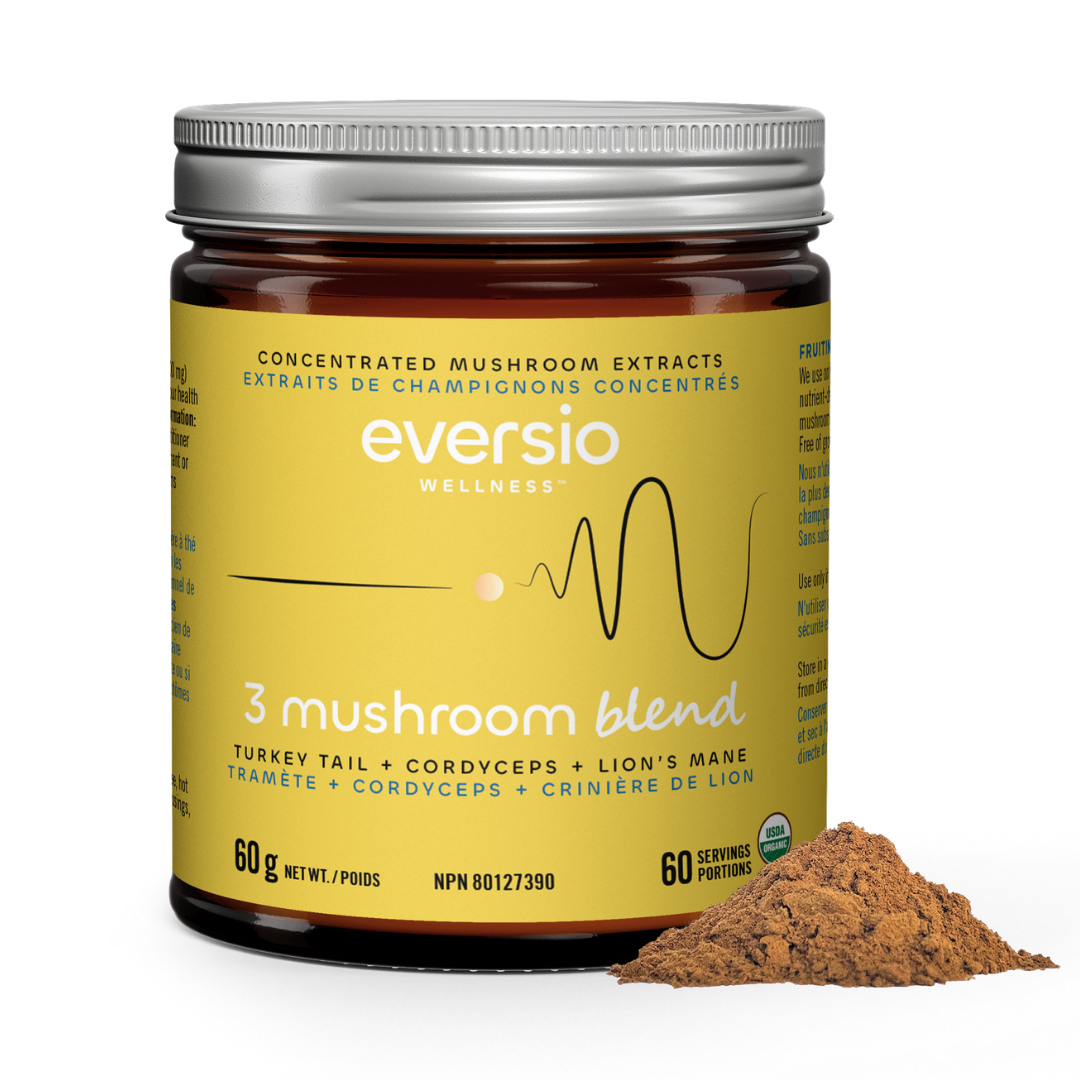
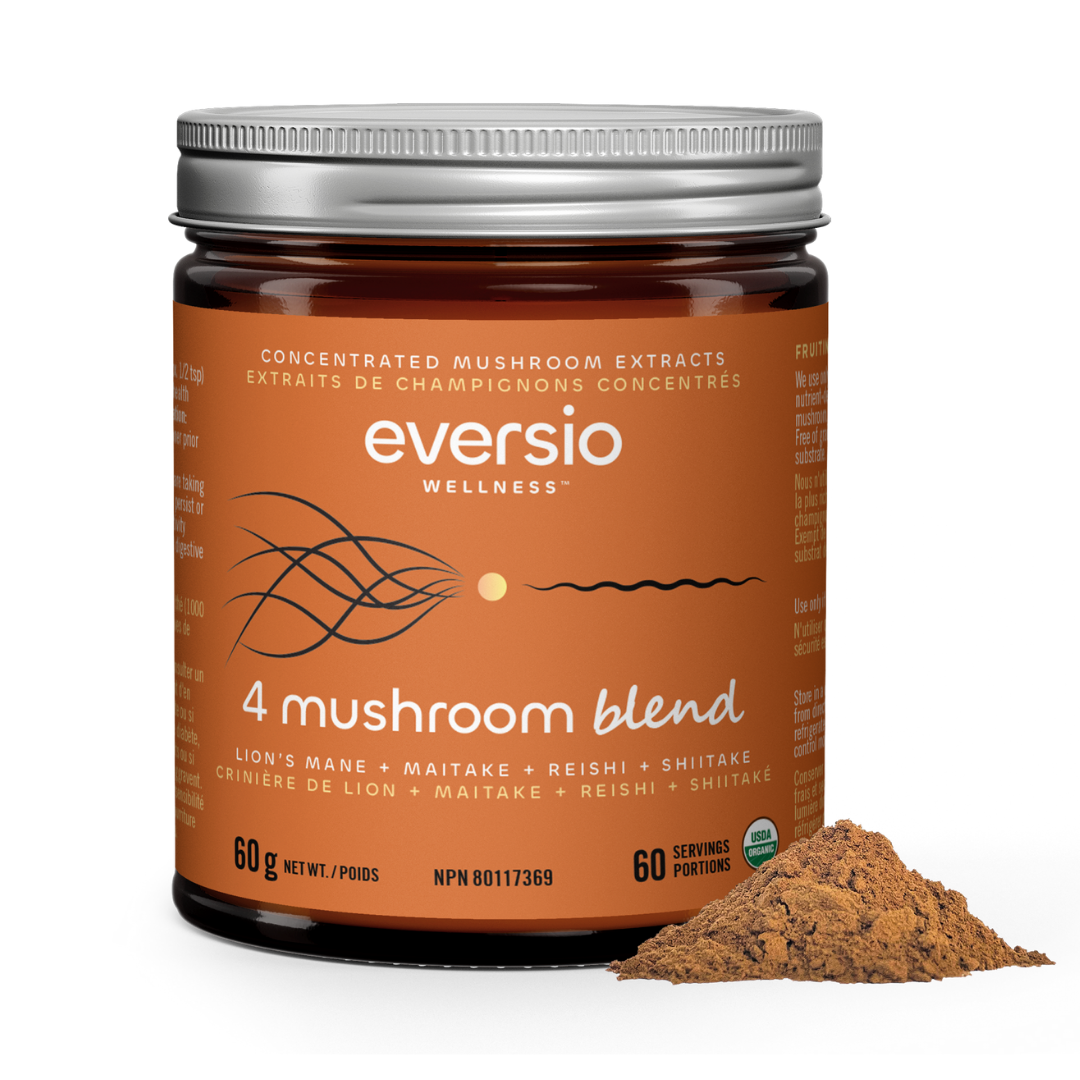
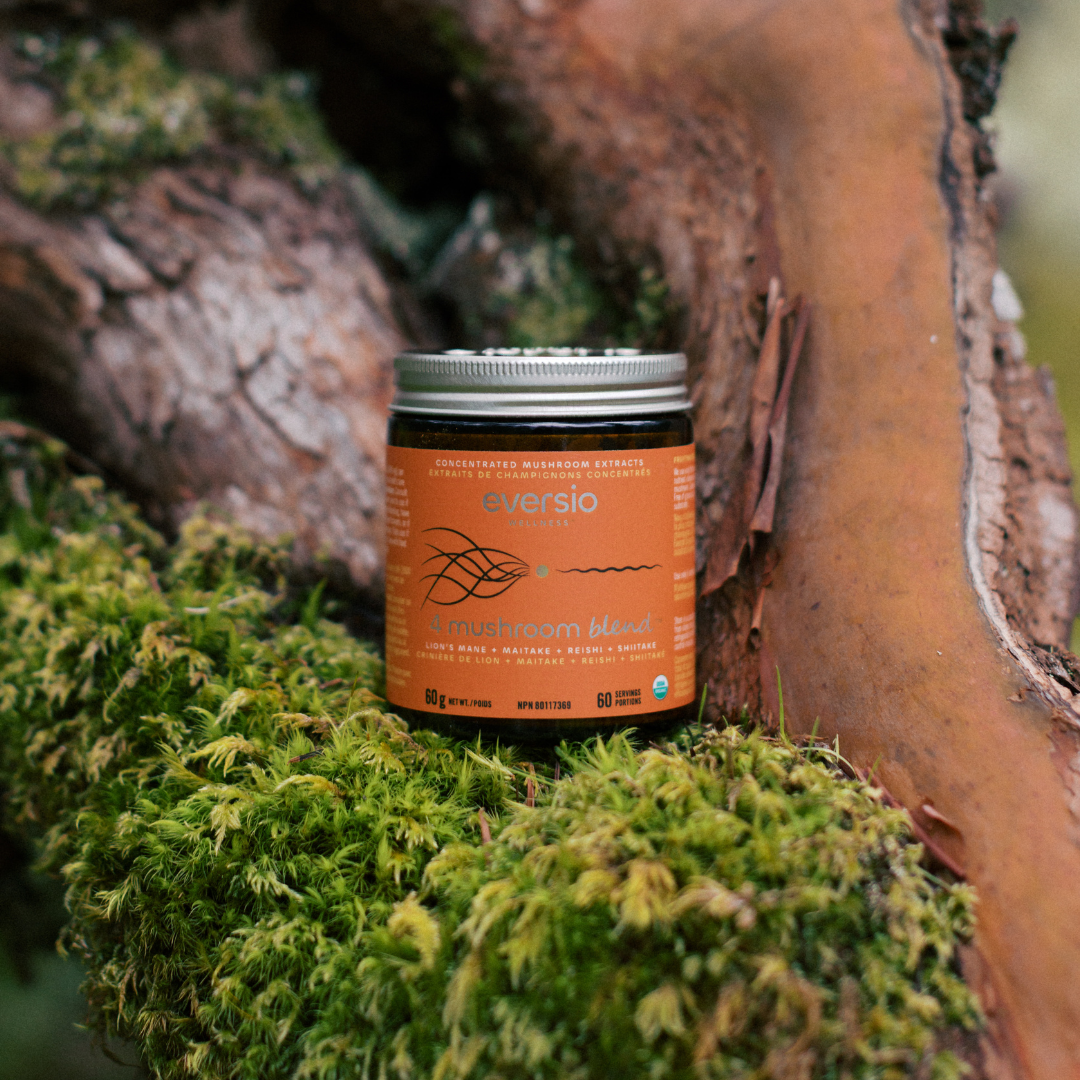
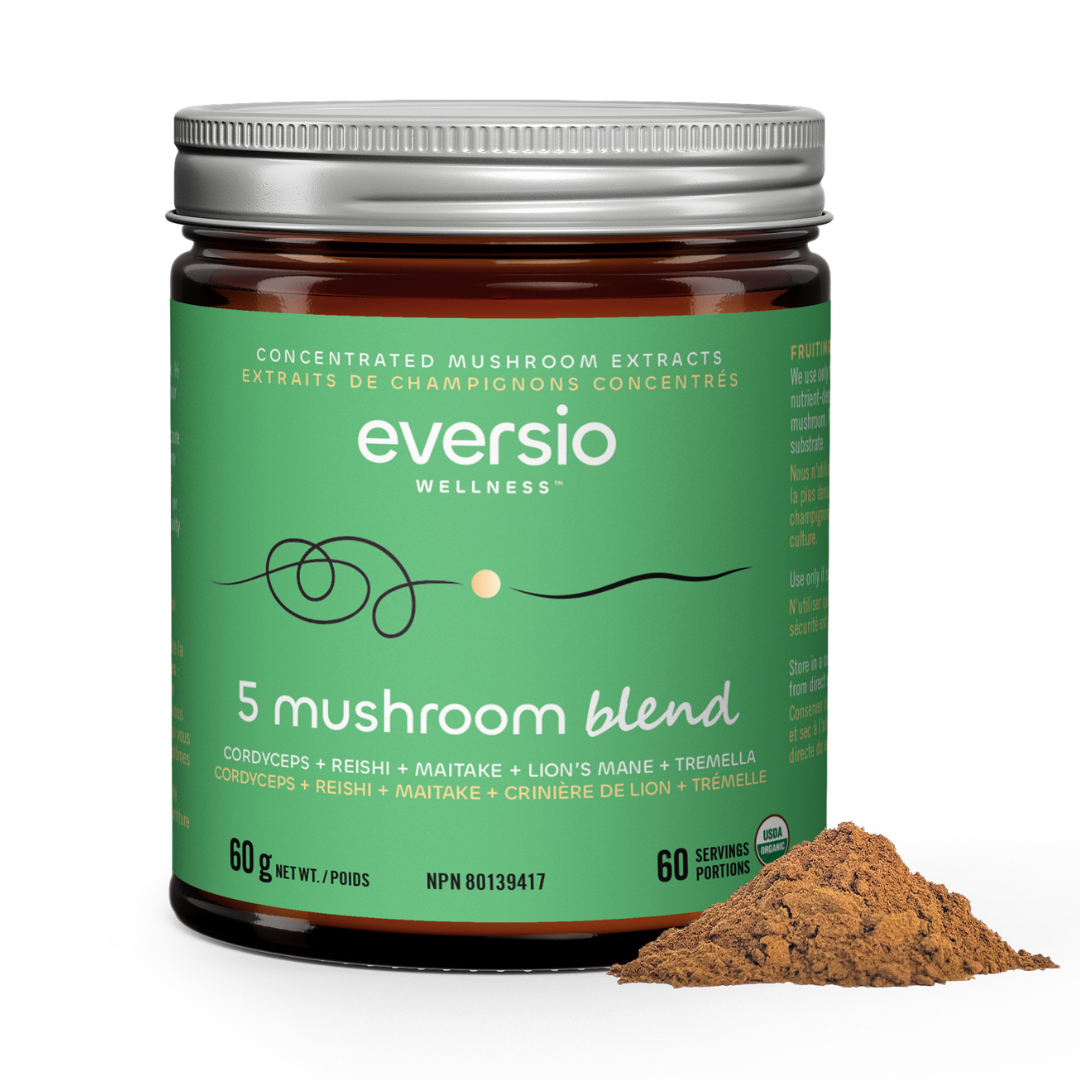
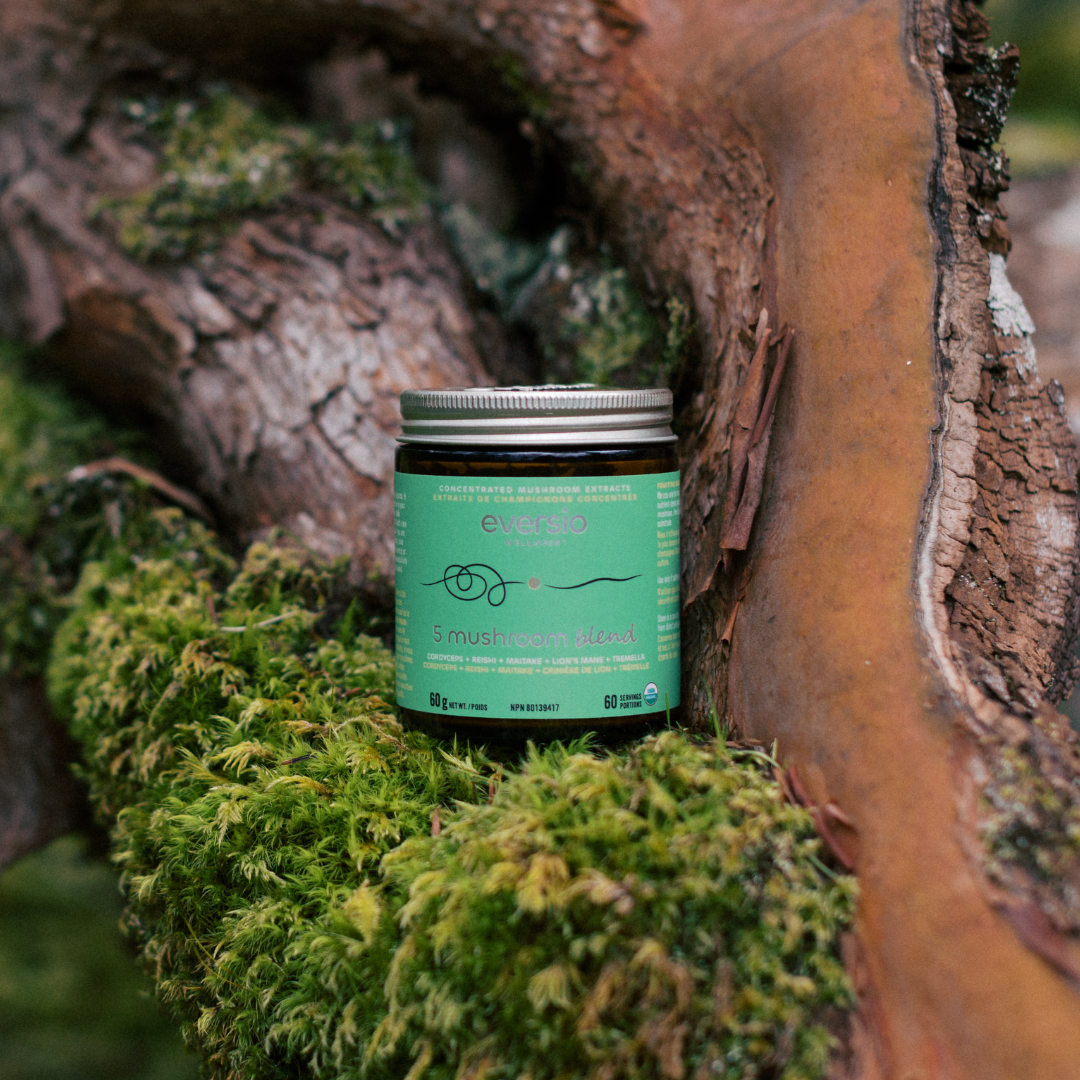
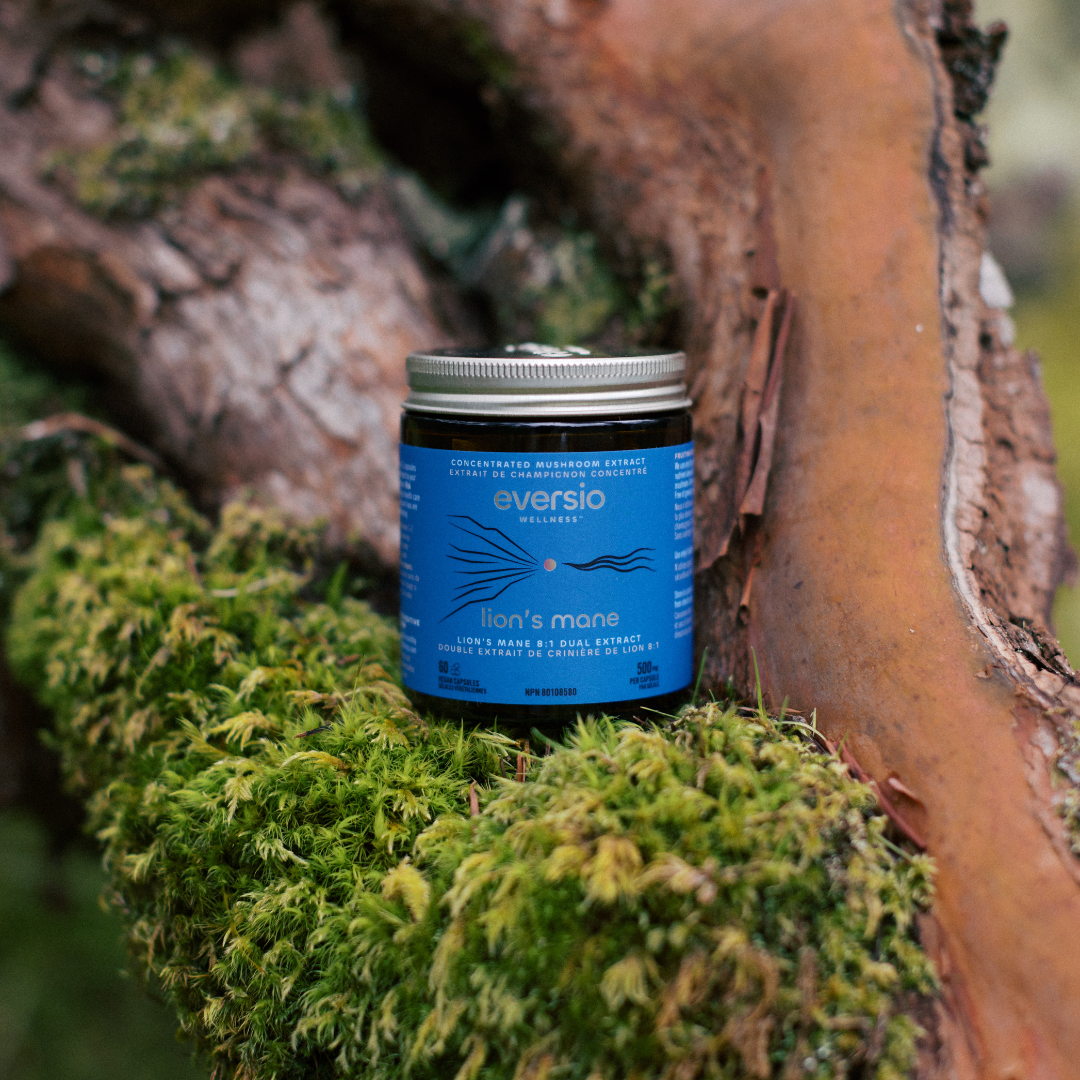
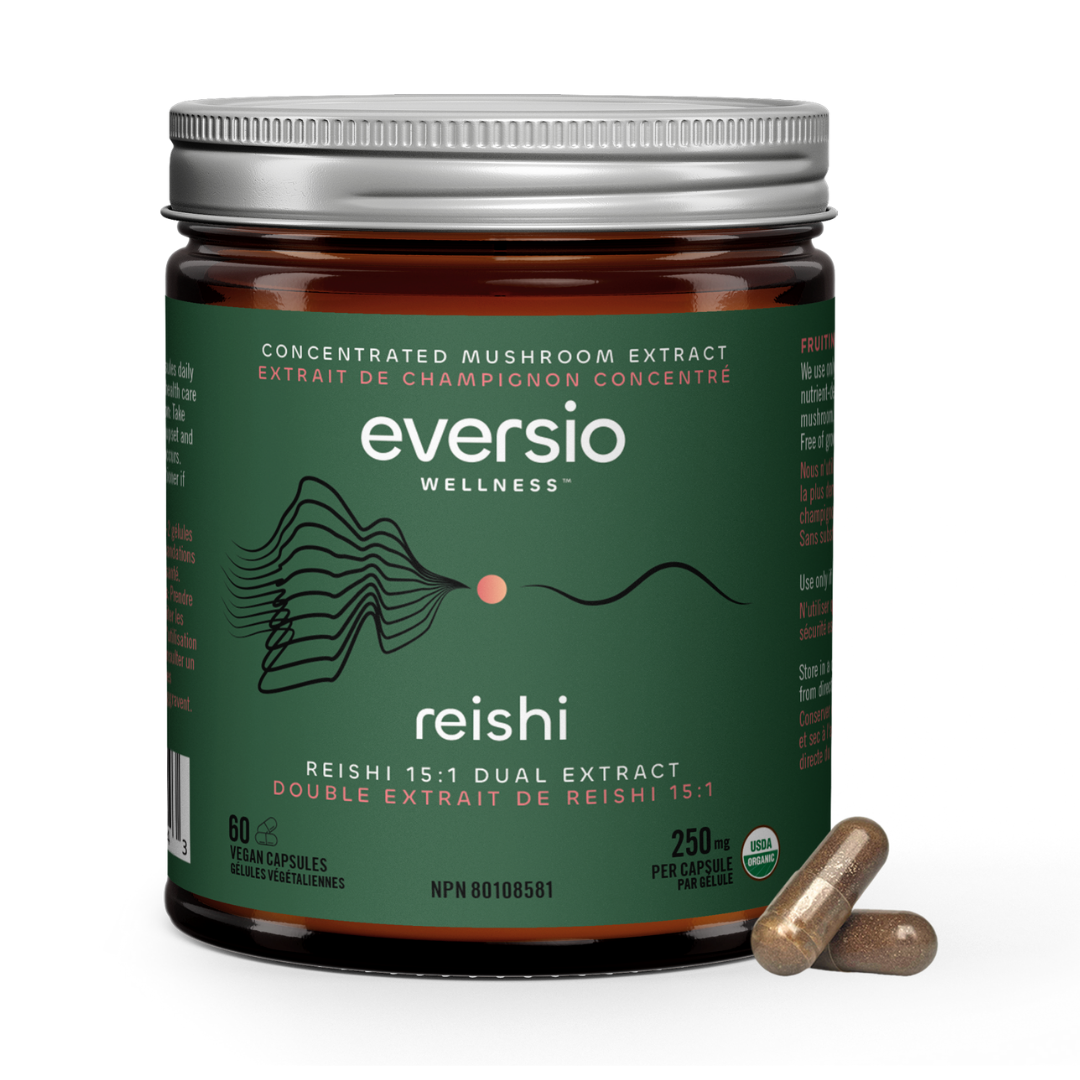
That's the thinking behind the Mushroom Moment Reset Box, our collaboration with Jenn. It pairs the Eversio 5 Mushroom Blend (Cordyceps, Reishi, Maitake, Lion's Mane and Tremella) as a morning ritual with 30 days of Synced, including access to the community forum and to Jenn herself. If you want to continue after 30 days, you can keep going at a discount.
What to take with you
- Movement doesn't have to be an appointment. Find a form that brings you back to your body.
- Notice the reps still in the tank, and notice when your form says stop.
- Safety comes before strength. If a space makes your body brace, start by making it feel safe.
- Try "I get to" instead of "I have to."
- Check where your time is going before deciding you don't have any.
- Pick one thing. Do it often, not harder.
- Find your Pat.






Leave a comment
All comments are moderated before being published.
This site is protected by hCaptcha and the hCaptcha Privacy Policy and Terms of Service apply.