


I want to start this one with a confession.
I have done breathwork. I meditate. I've gone to yoga. I've taken the retreats, worked with the coaches, and yes, I have mushrooms in my matcha every single morning. And for a long time, I would still end up in the same place. Depleted. Running on empty. Proud of it, even. That last part is the part I am still unpacking.
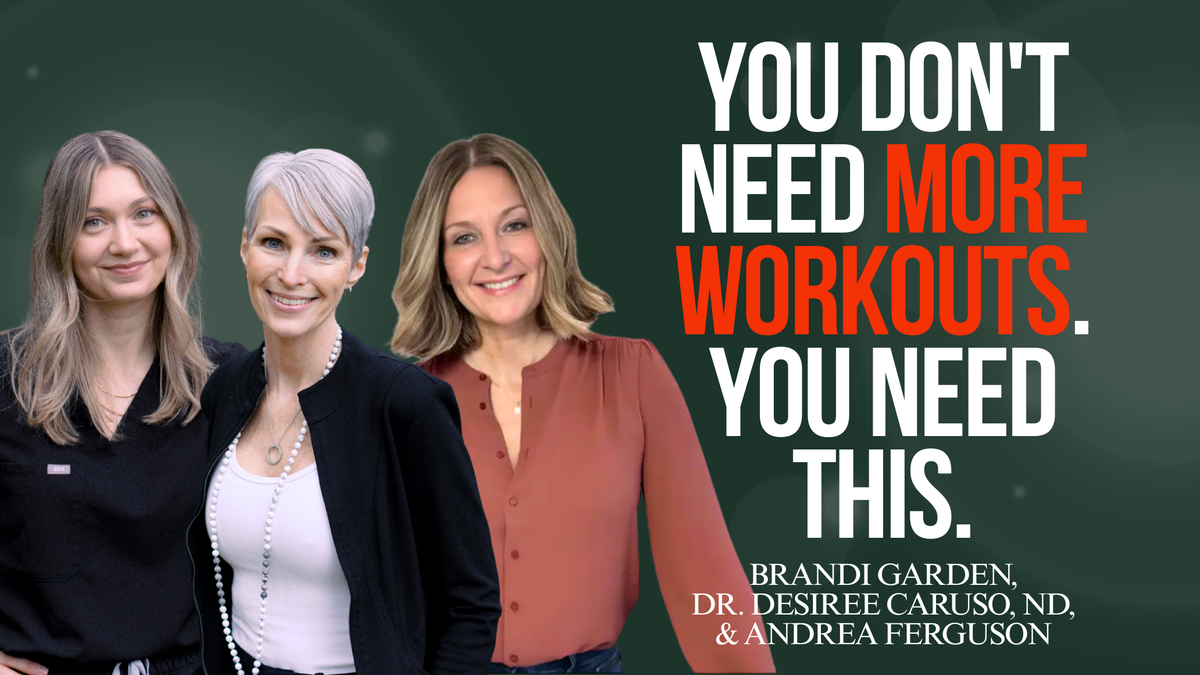
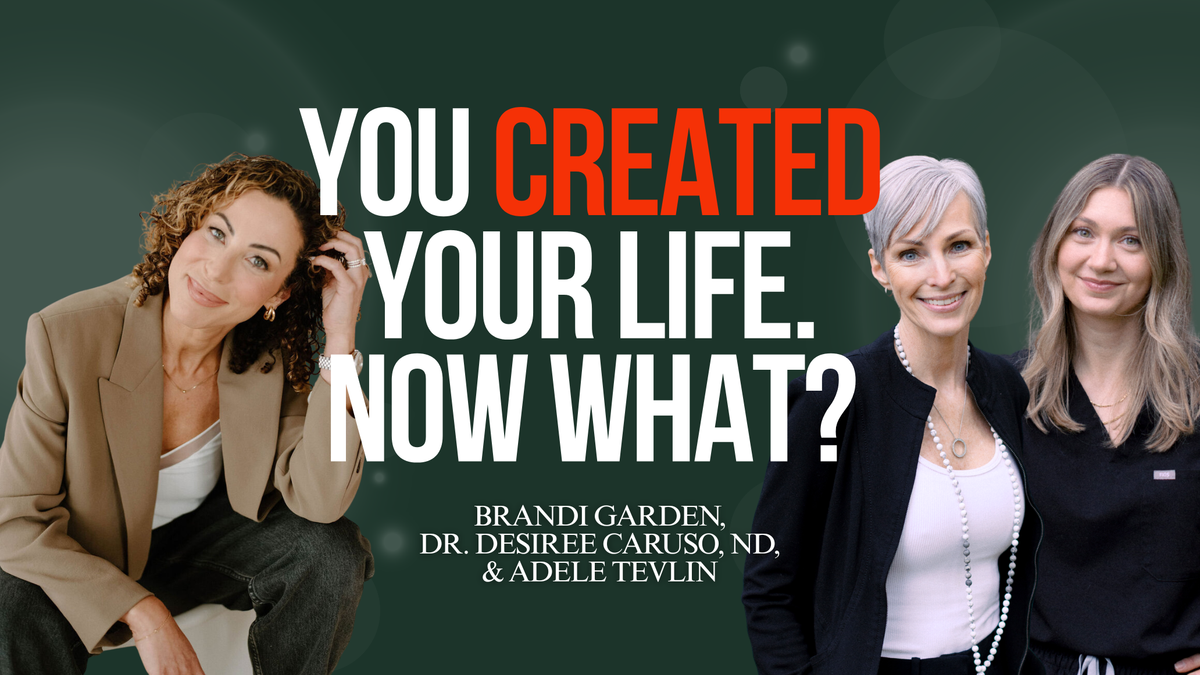
This week's episode of The Eversio Experience cracked something open for me. Dr. Des and I sat down with Andrea Ferguson, founder of the F.I.T. LIFE Method, and I want to share what came out of that conversation, because I think it is one of the most important things we have ever put into the world on this podcast.
If you are a high-functioning human who has "done the work" and still feels like something is off, this one is for you.

Are You Actually Healing, or Just Coping?
Most high-achieving people are managing stress, not clearing it.
This was the first thing Andrea said that stopped me cold. She described her own coaching business years ago and how she had a moment of realizing she was giving her clients just enough relief to stay in their situation. She called herself "the drug dealer." And the room went quiet.
Coping looks like this: you do the thing that gives you relief, you feel better for a moment, you go back to your life unchanged, you need relief again. Rinse and repeat. The pattern never breaks because the internal state driving the pattern never changes.
You know you're coping, Andrea says, when there's an energy of I need to escape. When your whole day is organized around getting through. When you're successful on paper and exhausted in your body.
The alternative isn't more discipline. It's building what Andrea calls internal capacity: the actual ability to feel discomfort, move through it, and return to yourself. That's the muscle most of us were never taught to build.
And here's what makes this feel personal to me: we were not taught this. There is no blame here. We were taught to manage stress. We were not taught how to actually feel it, metabolize it, and grow through it. That distinction matters.

What Is the "Window of Tolerance" and Why Are You Living Outside It?
The window of tolerance is your optimal zone: the state where you can think clearly, respond (rather than react), feel present, and actually enjoy your life.
Andrea describes it visually as a window with an upper and lower edge. The upper edge is hyperarousal: overactive, reactive, wired, running on cortisol. The lower edge is hypoarousal: flat, checked out, three hours on the couch watching Netflix not because you're relaxing but because it's all you can manage.
Most high-achieving people are swinging between those two edges every single day.
They hustle and grind. Then they crash. Then they feel guilty about crashing. Then they hustle harder. The middle, the optimal zone, the place where calm and capacity coexist, is almost entirely missing from the day.
When I mentioned my Oura ring in this conversation and how it shows me, in real data, how much time I have spent in stress versus recovery, this is what I was looking at. If you have a biometric device tracking your HRV, your readiness score, your time in stress, look at it honestly. For a lot of us, the picture is not flattering. And we've normalized it because we built our whole identity around being the person who can keep going.
The goal, according to Andrea, is not to eliminate the swings. You are always going to have periods of over-functioning and under-functioning. The goal is to grow the middle zone so wide that you land back there quickly, even when life pulls you to the edges.
That is resilience. Not pushing through. The capacity to return.

Why "Do More" Wellness Advice Is Making Things Worse
More discipline won't fix a dysregulated nervous system.
This is the part of the episode where Dr. Desiree asked what I think of as the spicy question: with all the "optimize your morning routine, push harder, do more" messaging flooding the wellness space right now, how does someone know when to push more versus when to do less?
Andrea's answer was clear. Physical wellness is important. She is not telling you to skip sleep or eat whatever you want. Sleep, nutrition, movement, what she and I both call the "boring basics," those are non-negotiable. But no amount of gym time or morning routines can compensate for chronic overdrive, emotional suppression, or a nervous system that doesn't feel safe to slow down.
Here's the thing about discipline: the way most of us apply it is through pressure. I just need to be harder on myself. I just need to try more. That is not discipline. That is more pressure on a system that is already overwhelmed. And pressure does not produce capacity. It accelerates collapse.
What actually works is rhythm. I love that Andrea used this word because it feels so much more like us. Not rigidity. Not a packed schedule of optimized habits. A rhythm. A consistency that comes from listening to your own body rather than forcing it into a structure someone else designed.
When you trust your internal rhythm and honour what your body is actually asking for, consistency becomes natural. You stop white-knuckling your way through a protocol and start living in a way that feels like you.

Your Body Is Not Betraying You. It's Talking to You.
Your physical symptoms are a message, not a malfunction.
This landed hard for me and I imagine it will for you too. So many women, myself included at times, have felt like their body was working against them. The brain fog. The exhaustion. The weight that won't shift. The hormonal chaos. It feels like betrayal.
Andrea flipped this completely. She said:
It's not the body betraying the mind. It's the mind refusing to listen to the body. Your body is reflecting your most dominant, consistent internal pattern back to you. It is communicating. When you learn to listen, the wisdom is right there.
She shared a story from a recent client session, a woman who came in feeling completely stuck, tunnel-vision on, no possibility visible. They did a healing session, no agenda, just gentle listening and breath. And what came through when that woman was finally given permission to stop dismissing what she was feeling, was everything she needed. The wisdom was already inside her. She just needed space to access it.
This is why the nervous system work comes before the lifestyle changes. Setting a boundary, communicating differently, changing your diet: all of those things are important. But without first coming home to your body and shifting what's happening internally, you will implement those changes and end up back in the same cycle six months later.
The body is not the problem. The body is the messenger.

Why You Can't Do This Work Alone (and Shouldn't Try)
We have blind spots. All of us. And the nervous system's default is to protect us from seeing them.
This is one of the parts of the conversation that I want every person in our community to sit with. We have a deeply ingrained belief that personal growth is a solo project. That needing help is a weakness. That if we just read enough books and take enough courses we will figure it out on our own.
Andrea was direct: she has not done this work alone. She has worked with practitioners, healers, and coaches across her whole career because she cannot see all of her own patterns. None of us can.
The reason for this is physiological, not personal. The nervous system has a very strong pull toward the familiar. It is wired to repeat default patterns because repetition feels like safety. That means we tend to see only what confirms what we already believe, and we often resist the things that are most necessary for our growth because those things require change, and change activates the threat response.
We need other people to hold up the mirror. To point to the blind spots. To say: look here, not there.
At Eversio, this is exactly why Dr. Desiree and I have both worked with Andrea personally and brought her in for our team. Early in our growth as a company, the conversations Andrea facilitated were hard. She pushed us. And because of that work, we understood what conscious business felt like. That is not a small thing.
You cannot meditate your way out of a pattern you cannot see. Community, and the right guide, is part of the work.

Where Do You Start If You Know Something Needs to Change?
Give yourself permission to listen.
When Dr. Desiree asked Andrea what she would tell the person who is somewhere between "I know something needs to change" and "I have no idea where to start," her answer was so simple it almost caught me off guard.
Start by getting honest with yourself. Notice what feels off. Give yourself permission to want what you actually want, not what you've been telling yourself you should want.
From there, get curious about emotional regulation. Andrea calls this the number one piece of this work. Not because it's a trend or a concept but because fulfillment, real lasting fulfillment, comes from the ability to listen to yourself and follow what you hear. And to do that, you need emotional regulation as a skill.
I added to this in the episode: curiosity plus honesty. If you can hold both of those at once, you have everything you need to begin. Ask yourself honestly: when something doesn't go the way I hoped, how long does that feeling stay with me? How much of my day is organized around managing the emotional fallout of stress, disappointment, or frustration? How much of my energy is going to surviving versus living?
If the answer surprises you, that is the beginning.

What Is the F.I.T. LIFE Method?
F.I.T. LIFE stands for Fully In Tune: body, mind, and spirit.
Andrea Ferguson's F.I.T. LIFE Method is a year-long coaching and mentorship program built on the idea that you cannot sustain external results without first doing the internal work. The program combines curriculum, one-to-one coaching, small group sessions, and real-time integration support. What makes it different is that the coaches who deliver the program have walked the path themselves. They have done the work. They are not teaching a concept. They are guiding from experience.
If you are in that place of knowing something needs to shift and not being sure what or how, I would say reach out to Andrea. Her website is FitLifeMethod.com and she offers a complimentary right-fit call to start the conversation.
And if this one spoke to you, share it. Send it to the person in your life who you know is doing all the things and still running on empty. They will know what you mean.
Until next time.
Be well,
Brandi








Leave a comment
All comments are moderated before being published.
This site is protected by hCaptcha and the hCaptcha Privacy Policy and Terms of Service apply.