


Most of us have a dental routine. Brush, floss, show up twice a year, leave with a goody bag and mild guilt about the flossing. It's a transaction. In and out.
But what if your mouth has been trying to tell you something about your sleep, your posture, your immune system, and your nervous system — and nobody has had the time or training to read it?
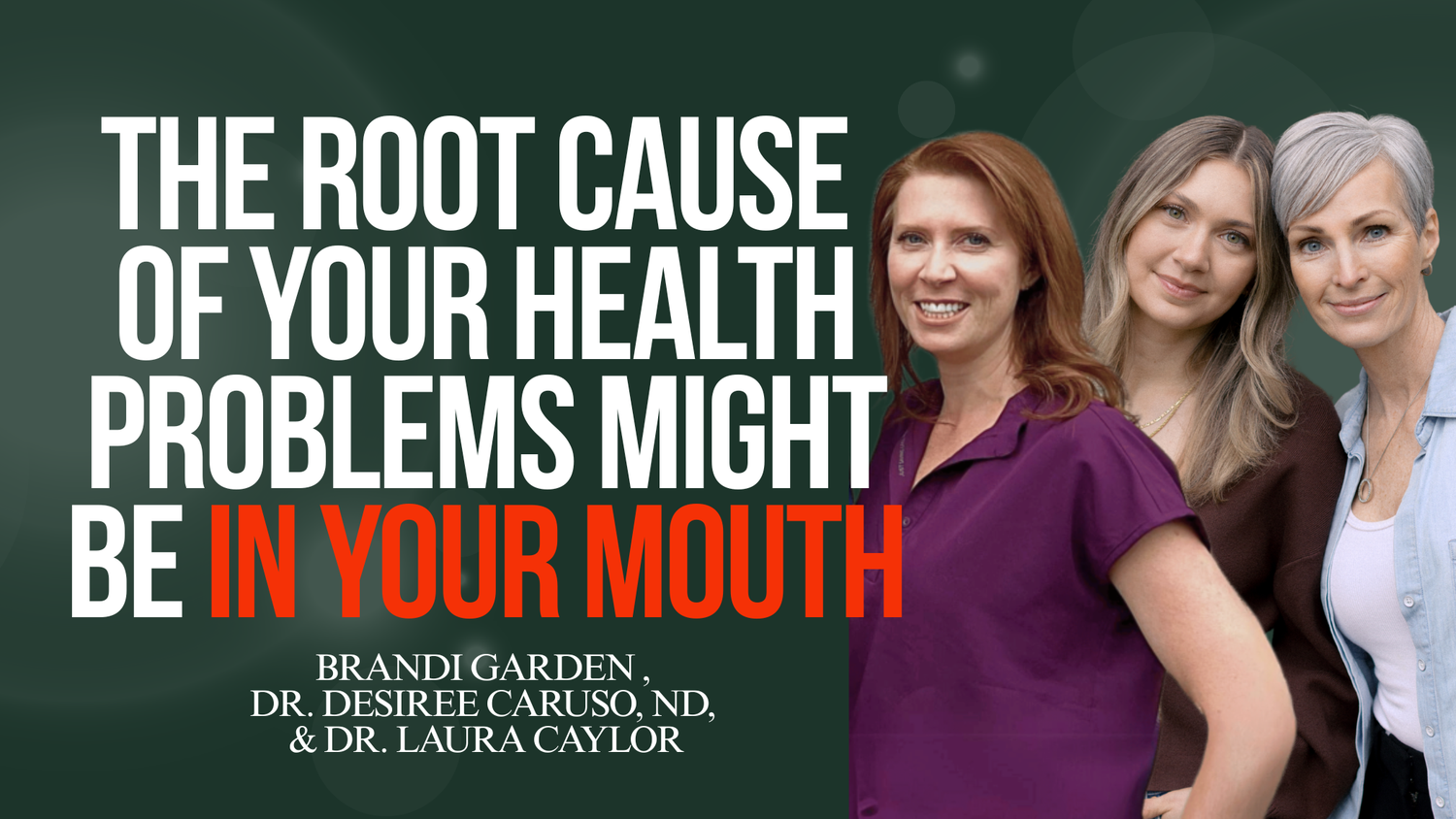
That's the premise behind the work of Dr. Laura Caylor, a dentist in Chilliwack, BC, who joined the Eversio Experience Podcast for episode 58. Dr. Laura practices what she calls root-cause dentistry: viewing the oral structure as a window into whole-body function rather than an isolated set of teeth to clean and fill.
She didn't learn any of this in dental school. She got there through her own kids, her own questions, and a magazine article that she picked up during a slow afternoon at work. What followed was years of additional training, a practice rebuilt around a new understanding, and a conversation we couldn't stop thinking about.
Here's what we covered.
The Nose Was Built to Do More Than Move Air
Mouth breathing is so common that most people don't notice they're doing it. But Dr. Laura makes a point of saying it clearly: the mouth is for eating, the nose is for breathing. They are not interchangeable.
The nose filters incoming air. It warms and humidifies it. And critically, it produces nitric oxide — a molecule your body needs for blood vessel dilation, oxygen delivery to tissues, immune function, and cardiovascular health. Nitric oxide is also produced by bacteria in the mouth that convert nitrates from food (think beets, leafy greens) into a usable form. When you mouth-breathe, you bypass nasal nitric oxide and dry out the oral environment, which kills off the bacteria responsible for that conversion. You lose it from both ends.
Chronic mouth breathing also shifts the oral microbiome toward more pathogenic bacteria, increases the risk of cavities, and directs air down the digestive tract in ways that disrupt the gut. One habit. A cascade of downstream effects.

Snoring Is a Symptom, Not a Personality Trait
If you snore, or sleep next to someone who does, Dr. Laura's first message is this: snoring is not just something you manage with earplugs. It is a signal that something in the airway isn't working properly.
The causes vary. The jaw may sit too far back, reducing space for the tongue and allowing it to fall into the throat during deep sleep. The nose may be congested or structurally blocked, forcing mouth breathing as a workaround. There may be a tongue tie restricting movement. There may be untreated allergies. In some cases, snoring points to sleep apnea — a condition with real implications for heart health, blood pressure, and long-term wellbeing.
The path forward always starts with an investigation: a sleep study, a visit to a doctor, and a proper oral-record appointment to assess jaw structure, tongue function, and nasal airway. Dr. Laura does not offer snoring as a quick fix because snoring is never a standalone problem.
Your Tongue Is Nature's Orthodontist
Most people know the tongue helps with speech and swallowing. Far fewer know that it's supposed to rest against the roof of the mouth at all times when not in use — and that this resting position does a significant amount of structural work.
The tongue, when resting properly against the palate, guides the development of the upper jaw and midface. The roof of the mouth is the floor of the nose; adequate tongue pressure from below shapes the entire mid-facial structure, including the cheekbones, sinuses, and the space beneath the eyes. It maintains airway patency during sleep by creating a suction-cup effect that keeps the throat open. It stabilizes the jaw.
When tongue function is restricted — as with a tongue tie — the body adapts. Teeth crowd. Jaws don't develop to full capacity. Airway space narrows. Over years, this leads to the kind of structural patterns Dr. Laura sees regularly: forward head posture, jaw tension, poor sleep, and midface underdevelopment.

Tongue Ties Are Not Just a Newborn Problem
The association between tongue ties and breastfeeding struggles is well established. What's less discussed is what happens when a tongue-tie goes unaddressed after the newborn window.
Dr. Laura traces the progression in her practice: the baby who struggled at the breast becomes the toddler who gags on solids or has recurrent ear infections, then the school-age child with crowded teeth and mouth breathing, then the adult with TMJ tension, neck pain, forward head posture, and disrupted sleep.
Tongue ties are made of collagen that does not stretch or dissolve with age. The restriction persists, and the body continues to compensate for it. Those compensations show up differently at different life stages, which is why Dr. Laura pays close attention to tongue function in patients of all ages.
The fascial connection is also worth noting: the deep front fascial line runs from the tongue to the toes. Restrictions at the tongue can create tension patterns through the throat, chest, abdomen, and lower extremities. Dr. Laura works alongside chiropractors, osteopaths, craniosacral therapists, and RMTs to address these patterns, especially after a tongue tie release.
Signs to Watch For
Dr. Laura walked through the red flags she watches for at each life stage:
In infants: pain during breastfeeding (not normal), excessive spitting up, colic, inability to be soothed after feeding, poor weight gain.
In toddlers and older children: mouth breathing, crowded teeth, recurrent ear infections, speech delays, hyperactivity, dark circles under the eyes, night wakings, bed wetting, signs of poor sleep quality.
In adults: chronic mouth breathing, forward head posture, jaw tension or TMJ symptoms, neck and shoulder pain, midface changes, and sleep breathing concerns.
None of these symptoms automatically mean tongue tie — but a tongue tie belongs on the list of possibilities to investigate.
The Daily Stuff That Actually Matters
Dr. Laura closed the conversation with her practical routine and a few strong opinions on common dental habits.
She brushes twice daily with a hydroxyapatite toothpaste (Nelson's Naturals, a BC-based brand she vetted directly with the company for concentration and sourcing). She does not use commercial mouthwash, which she says disrupts the oral microbiome and often worsens bad breath over time. She recommends waiting at least 20 minutes after coffee or lemon water before brushing — brushing immediately after acidic intake softens and erodes enamel. She uses a tongue scraper. She and her family do nightly sinus rinses and use a xylitol nasal spray, which made a significant difference in her son's chronic congestion.
On mouth taping: she considers it a useful tool if — and only if — the nasal airway is clear. If there is any congestion or blockage, taping the mouth shut during sleep is not safe. Test it during the day first. If it feels comfortable to breathe through the nose with the mouth taped for a few minutes of waking activity, nighttime use may be appropriate.

Where to Start
Dr. Laura is active on Instagram at @dr.lauracaylor and sees patients at Veter Dental in Chilliwack, BC. She is also releasing a course for parents navigating tongue-tie decisions at https://www.thetonguetiecourse.com.
If any of this episode sparked recognition — for yourself, your partner, or your child — the first step is simply to pay attention. Where is your tongue resting right now? Are you breathing through your nose? Is the person sleeping next to you snoring? These are small observations, but they open doors.

















Leave a comment
All comments are moderated before being published.
This site is protected by hCaptcha and the hCaptcha Privacy Policy and Terms of Service apply.