



Samantha March has built a career out of creating: nine published novels, a YouTube channel, a product brand, an Instagram audience that follows along because she feels like a friend. For years, the creative output kept coming. What most people didn't see was what was happening to her body at the same time.
In Episode 60 of The Eversio Experience, Samantha sits down with Brandi Garden and Dr. Desiree Caruso, ND, to share her four-year journey with adrenal PCOS. From the first whisper that something was off to a diagnosis that finally made sense to a routine that still holds four years later, this is the full story.
It is also a story many women are living right now.

When "I Feel a Little Off" Is a Warning Sign
Samantha is a journaler. She keeps every journal. When she went back through the entries from 2021, she found the same phrase appearing in October over and over again: "I felt a little off today."
Not a specific symptom. No dramatic event. Just off. Those were the whispers.
Brandi put it clearly during the conversation: "If you don't listen when your body whispers, it's going to scream at you."
For Samantha, the screaming came quickly. Within months, she was experiencing:
- Extreme fatigue and two-hour afternoon naps when she had never been a napper
- Brain fog severe enough to drive to the post office with no memory of the drive
- Leaving her apartment in her slippers without realizing it
- Preheating her oven to make cookies, returning to the kitchen, thinking she should preheat the oven, walking over, and finding it was already on with no memory of having turned it on
- Sudden weight gain of approximately 30 pounds
- Hair thinning again after years of recovery from fertility treatments
- Hormonal acne returning on her face, chest, and back
- A stomach that was chronically bloated, distended, and hard
She had moved to Las Vegas in April 2021 with real momentum: a new chapter, a business launch, enthusiasm for everything ahead. By October, she was struggling to get through the days.
Being Dismissed and What That Costs
Samantha went to her OBGYN. Then her primary care doctor. Then an internist. Then an endocrinologist. None of them ran labs. None ordered any testing. Each one told her the same thing: this is normal for a woman in her 30s.
She knew it didn't feel normal. But being dismissed repeatedly has a cost, and in Samantha's case, that cost was shame.
"I felt a lot of shame in my health journey because I've always talked a lot about health," she shared in the episode. "And all of a sudden, not only did I feel unhealthy, I looked unhealthy. You could tell something was wrong by looking at me."
Shame pushed her inward. She got quieter, canceled plans, stopped talking about it publicly. She was building her brand By Samantha March during this same period, but the weight of not feeling well while trying to show up on camera every day was its own kind of exhaustion.
Dr. Desiree draws a line here that matters: there is a difference between what is common and what is normal. Chronic fatigue, brain fog, hormonal acne, and unexplained weight gain showing up together are not a standard feature of being a woman in your 30s. They are signals. And they deserve answers.

The Diagnosis That Changed the Direction
A friend made a referral. That referral led Samantha to a naturopathic doctor. That naturopathic doctor ran labs. What came back was specific: adrenal PCOS, plus an E. coli infection affecting her gut and microbiome that had likely been there the whole time.
PCOS stands for polycystic ovarian syndrome. It was recently renamed to polyendocrine metabolic ovarian syndrome (PMOS) to better reflect what the condition actually involves: not just ovarian cysts, but the interplay between metabolism, blood sugar, androgens, and stress hormones. Samantha had the adrenal type, meaning her adrenal glands were the main driver of her hormone imbalance.
The diagnosis brought relief, not dread.
"I felt so much relief that I had an answer. That it wasn't normal. That I didn't have to just expect it to be this way the rest of my life," she said.
She had something to work with. She had a direction.
What Actually Helped
Samantha's approach was built around her specific lab results, developed in partnership with her naturopathic doctor. Here is what she describes as the foundation:
Get the labs first. Before trying any supplements, any cleanses, any elimination protocols, Samantha's number one recommendation is to get hormone labs done. She spent significant money over months on random supplements and approaches that had no relationship to what was actually happening in her body. The labs were more useful and, in the long run, more cost-effective than years of guessing.
The elimination diet. Her ND recommended starting with a 30-day elimination diet to identify and remove inflammatory foods. The mental clarity Samantha noticed within weeks was significant. She now approaches her meals by asking what she can add (fiber, protein, healthy fats, anti-inflammatory foods) rather than what she has to remove. She also does periodic sugar detoxes and says the clarity that follows is difficult to describe. You just notice you can think more clearly.
Stress management, not stress avoidance. When her doctor said she needed to manage her stress, Samantha heard "eliminate all stress." Her doctor had to reframe it: stress isn't going away, but the body needs daily practices to process it. Morning sunlight in her eyes before screens. No phone for 30 minutes before bed so her body could actually wind down before sleep. Breathwork, which she still uses daily. Simple things. Not sexy things. Things that work.
Walking over the gym. Samantha's cortisol levels were off the charts. Intense gym sessions were keeping her body in a constant stress state rather than helping her recover from one. Her doctor recommended switching to low-impact exercise until her symptoms stabilized. Samantha switched to walking. She now does close to 20,000 steps a day and says she walks after every meal specifically for the effect on digestion, lymphatic circulation, and blood sugar. She has never gone back to intense daily training. The walking became her answer.

Where Functional Mushrooms Fit In
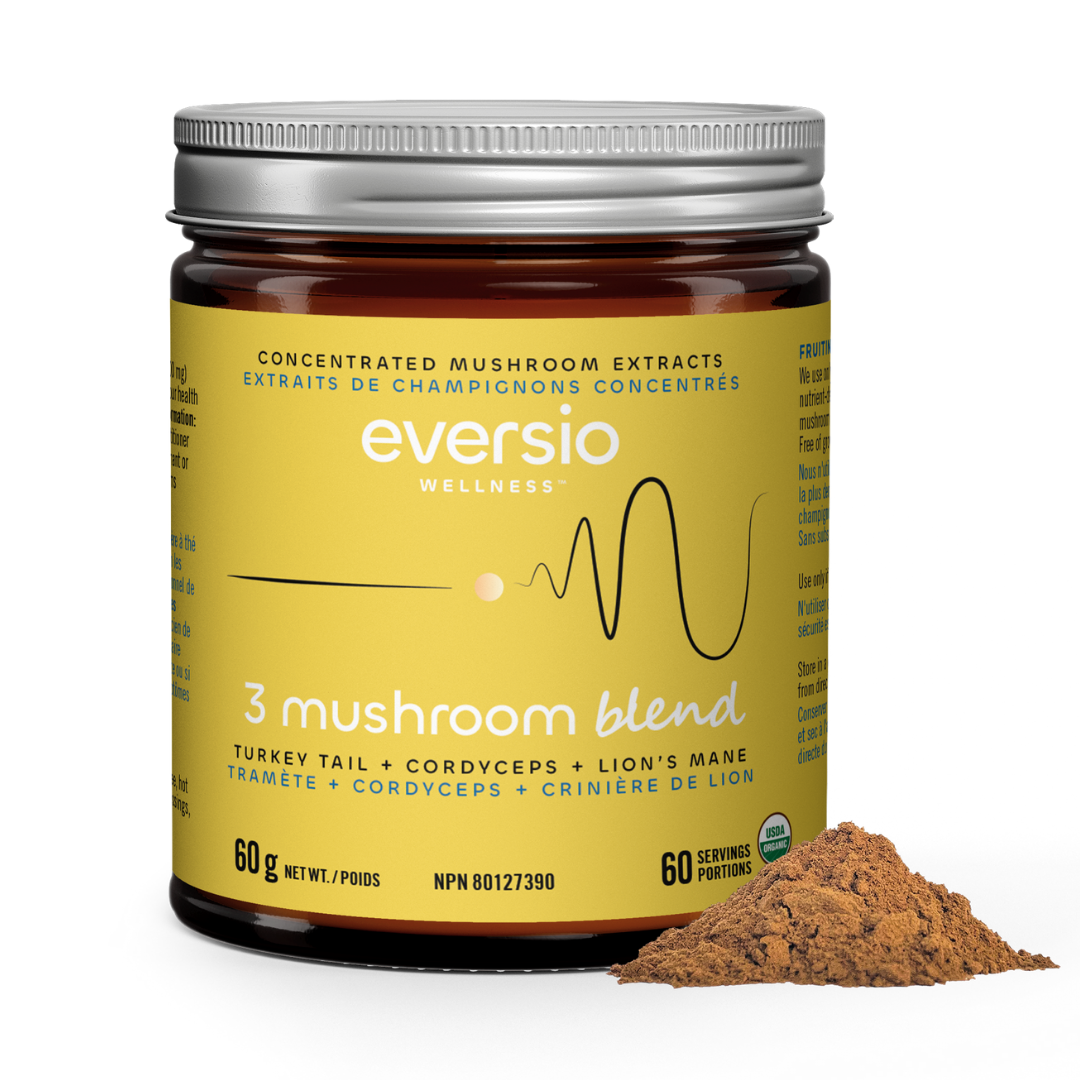
Once her foundational habits were in place, Samantha started looking at what else could support her body long-term. Her naturopathic doctor recommended Turkey Tail.
Around the same time, her holistic vet recommended Turkey Tail for her dog Aries, who had been diagnosed with cancer. Aries's oncologist agreed with the recommendation. Two separate practitioners, two separate patients, one mushroom coming up twice in the same window. That got Samantha's full attention.
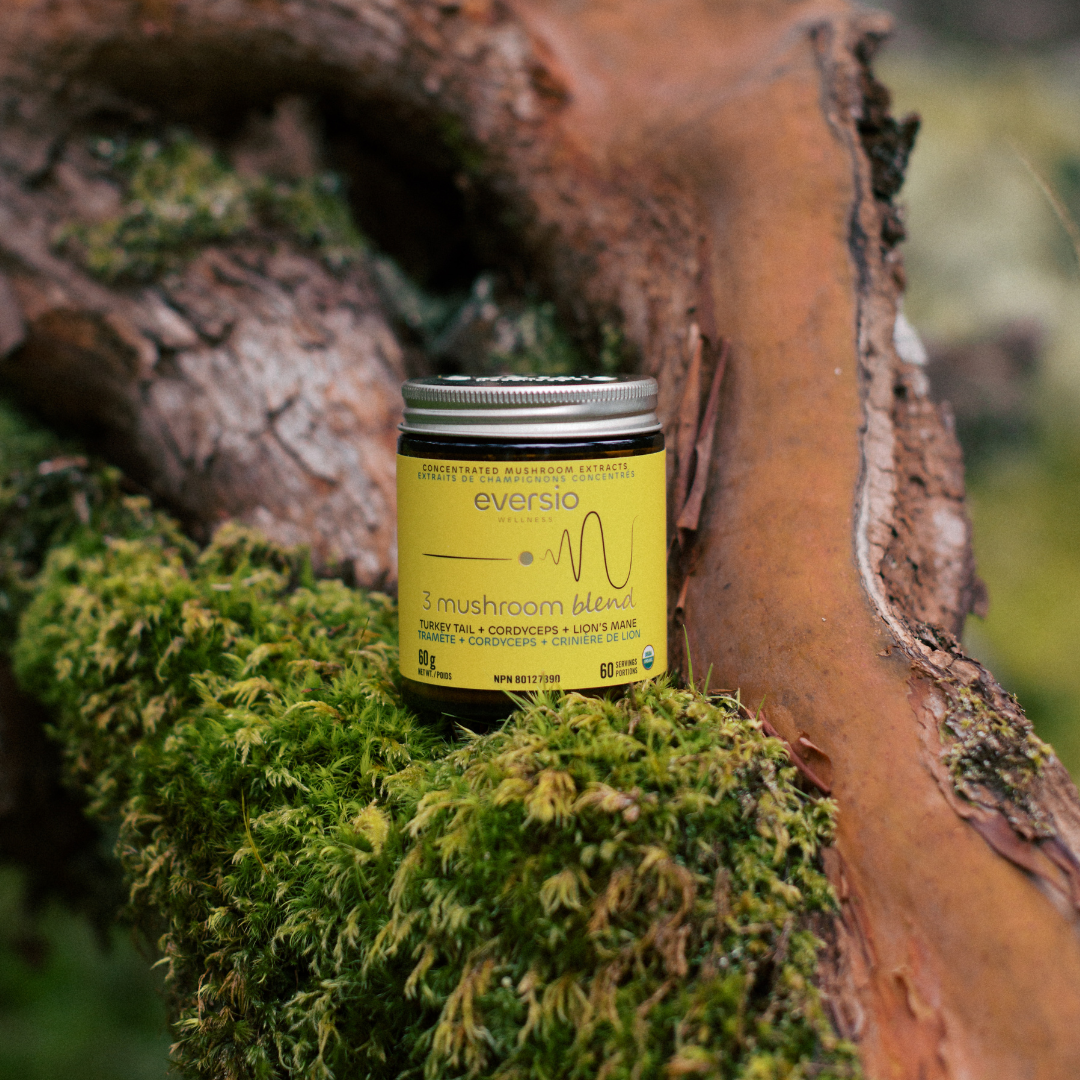
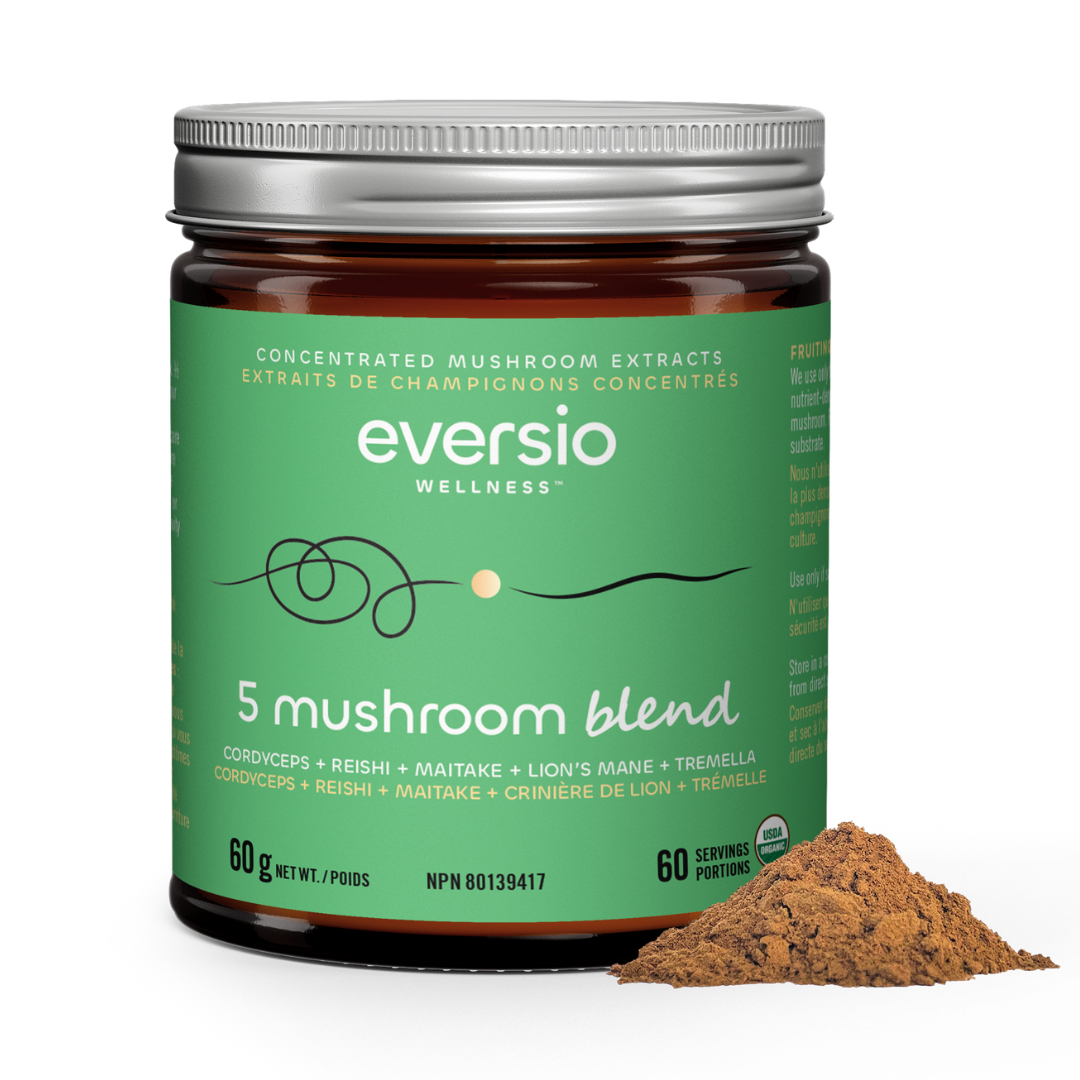
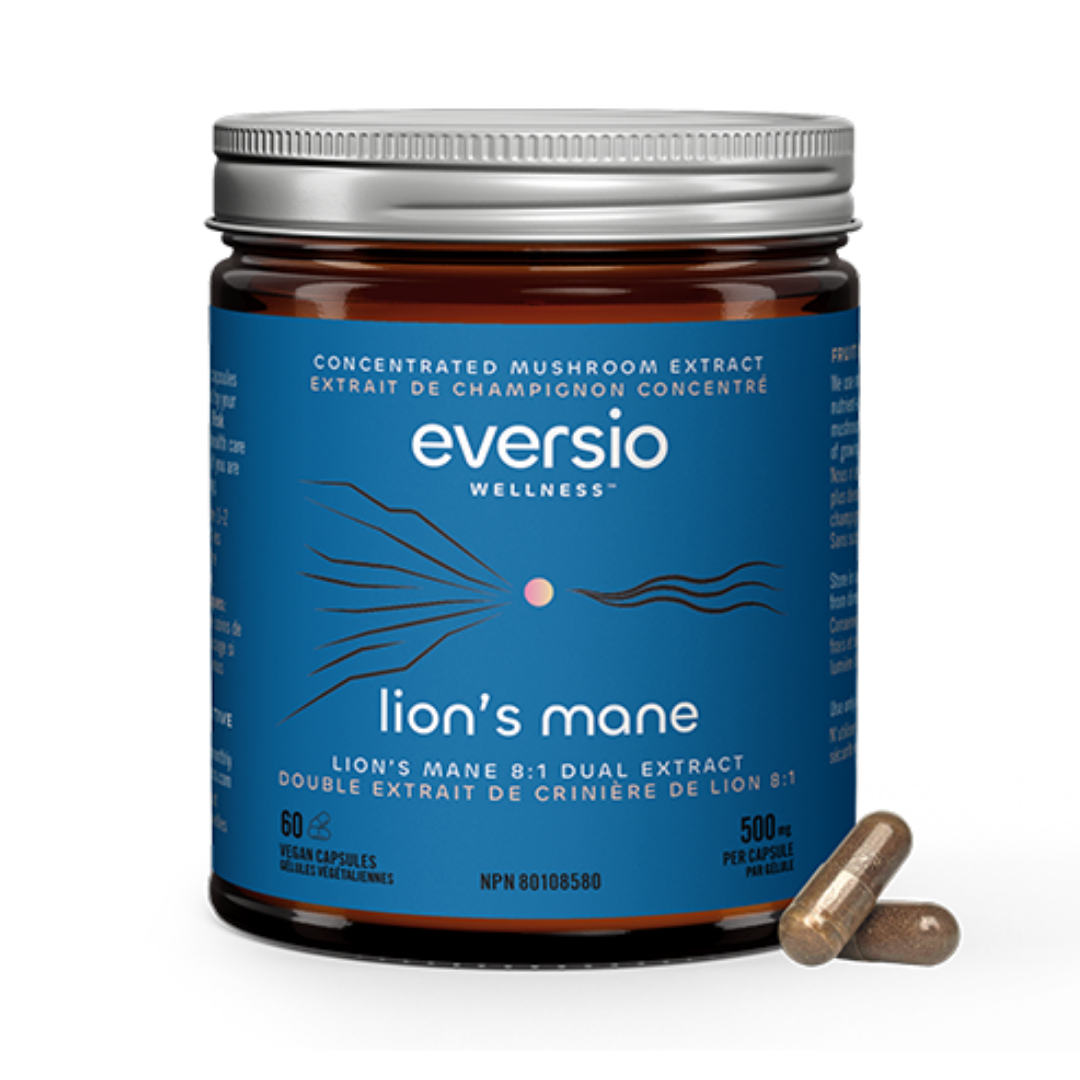
She found Eversio Wellness while researching, watched the videos, went through the website, and started Turkey Tail and Lion's Mane. She didn't notice an overnight change. That's not how it works, and she's the first to say so.
"I don't think I took lion's mane and then my brain fog disappeared and I held so much energy the rest of the day," she said. "Because then what happens is the next day you start to rely on the quick fix."
Instead, a few weeks in, her concentration started to shift. The fog began to lift. The mental clarity she had been chasing for over a year started to come back in a way that felt sustainable. She has taken Turkey Tail and Lion's Mane every day for four years. She has never stopped.
Four Years Later
Samantha is not claiming a quick fix or a single product that changed everything. She is deliberate about saying this took time and that the foundational pieces had to come first. What she does claim is four years of feeling genuinely well, a body she understands, and a level of health literacy she could not have gained any other way.
"I would rather have all of the knowledge I have now about health, hormones, anti-inflammatory foods, gut health, and inflammation, and have one year of my life where I didn't feel good. When you look at it in the grand scheme of things, it's worth it."
She is sharing this story publicly now because she has the receipts. And because she knows there are women right now sitting in their own version of October 2021, writing "I feel a little off today" in their journal and wondering if it's worth saying something.
It is worth saying something. There is a way through. And it starts with getting the data.







Leave a comment
All comments are moderated before being published.
This site is protected by hCaptcha and the hCaptcha Privacy Policy and Terms of Service apply.